The MQL-to-SQL handoff process looks like alignment. Both teams follow the SLA. Both teams report clean numbers. End-to-end, the pipeline does not get built. ‘The Handoff Illusion’ is not a process failure. It is a signal validity failure. The fix is upstream: replace content-engagement MQL triggers with buying signal clusters that reflect actual purchase readiness before the handoff is created.
MQL to SQL Conversion: Why the Handoff Keeps Failing
Demand
Sep 6, 2026

In this article
- The Meeting Where Both Sides Are Right and the Pipeline Is Still Empty
- Why MQL to SQL Conversion Stays Broken Despite Process Fixes
- The Response Time Trap
- The Blame Loop and the Data Nobody Pulls
- Buying Signal Clusters: What the Handoff Trigger Should Actually Measure
- What Implementing Buying Signal Clusters Requires Operationally
- Final Thoughts
- FAQs
The Meeting Where Both Sides Are Right and the Pipeline Is Still Empty
800 MQLs. Handoff SLA met. SQL rate reported at 13%. 19 in active pipeline.
Both teams followed the process. The MQL-to-SQL handoff ran on schedule. Rejection reasons were logged. Disposition data looked clean. The marketing dashboard showed volume. The sales dashboard showed follow-up activity. End-to-end: 19 pipeline-qualified accounts from 800 contacts passed.
The marketing team can defend the 800. The sales team can defend the 13% SQL rate. Neither number is wrong. The number that is wrong is 19.
This is ‘The Handoff Illusion.’ The process is intact. The signal the process is built on is not.
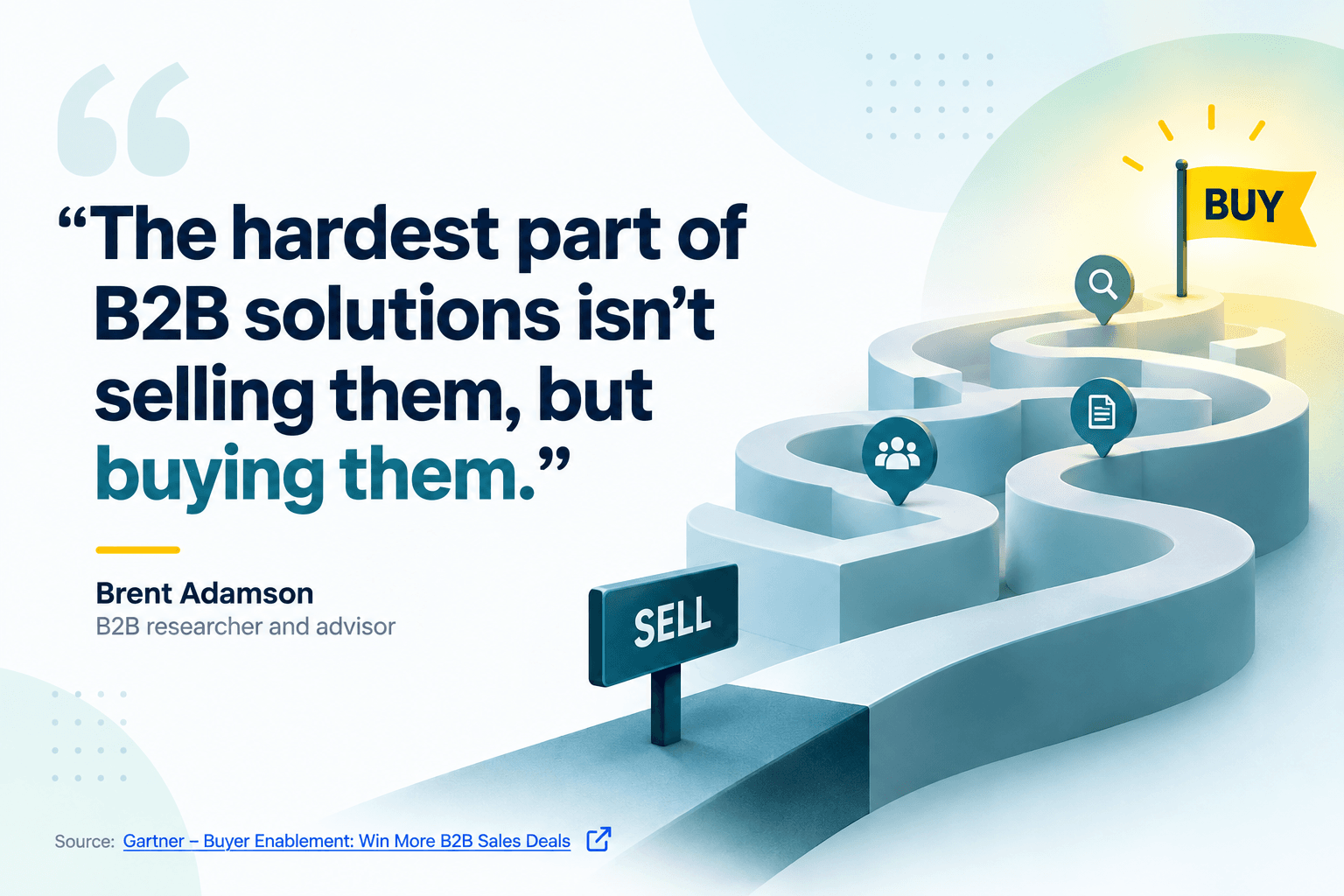
Why MQL to SQL Conversion Stays Broken Despite Process Fixes
79% of marketing leads never convert to sales opportunities (MarketingSherpa, via HubSpot 2025). At the median B2B company, MQL to SQL conversion sits at 13% (Cognism Outbound Benchmarks, 2024). Sales rejects more than 50% of MQLs at handoff without a formal SLA violation, meaning the process ran correctly and the outcome was still rejection (InsideSales).
The diagnostic question most teams avoid: what is the MQL actually measuring?
In most B2B demand gen programs, the primary MQL trigger is content engagement, a form fill, a webinar registration, a content download above a lead score threshold. A single content download is a weak predictor of purchase intent on its own. Most gated content downloads happen well before a buyer is ready to talk to sales, with B2B buyers spending just 17% of their total buying time in direct contact with potential vendors (Gartner, 2020, refreshed 2022).
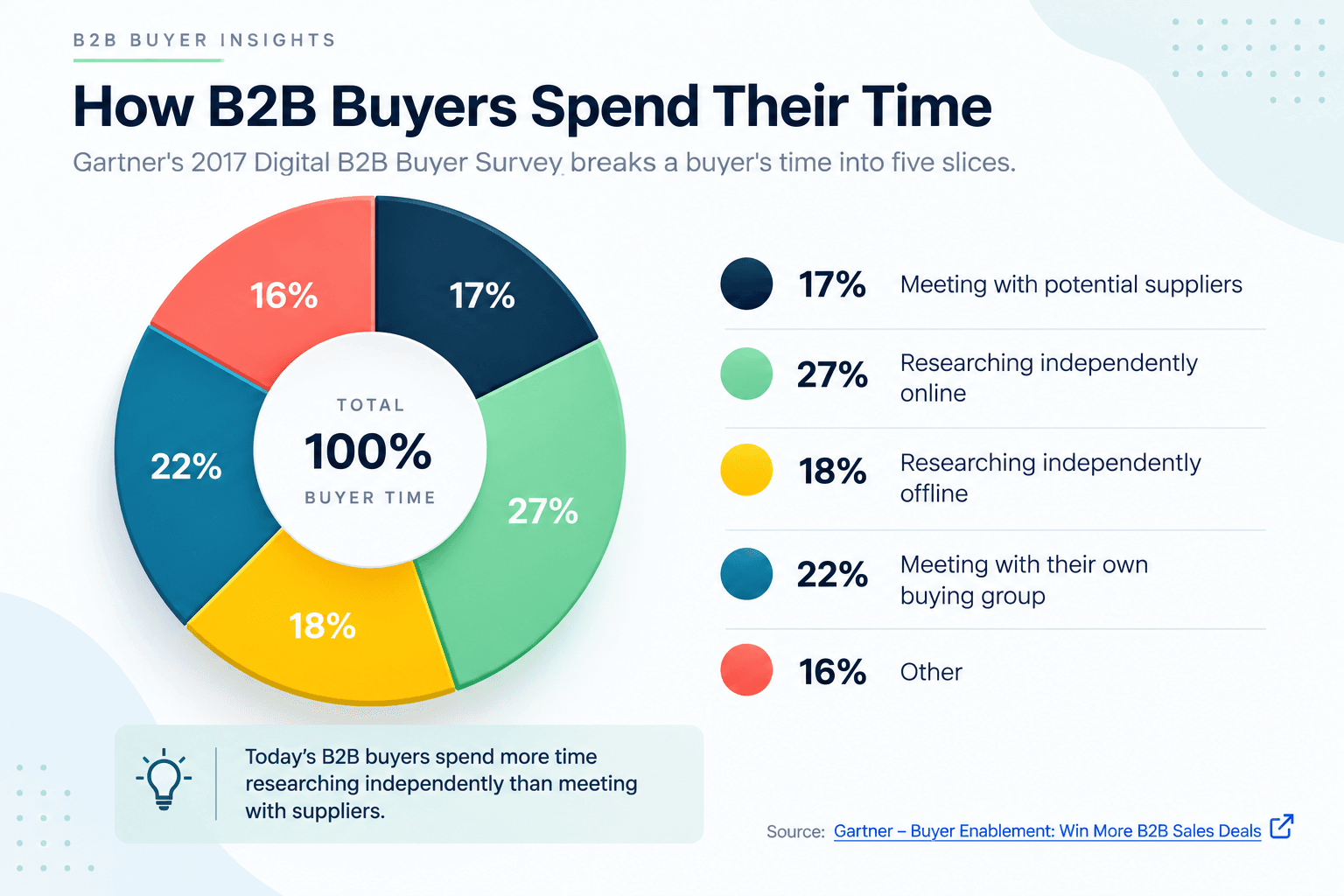
The MQL trigger was designed to create a handoff event. It was not designed to reflect buying readiness. When the handoff event fires on a research-stage download, ‘MQL to SQL conversion’ is not a process improvement problem. It is a signal validity problem.
Every process improvement layered on top of a bad signal, faster response, better routing, more granular scoring, improves the mechanics of a failure. It does not change what the signal is measuring.
The Response Time Trap
The MIT/InsideSales Lead Response Management study found that leads called within 5 minutes are 21 times more likely to qualify than those called after 30 minutes. The average B2B first response time is 42 hours (Harvard Business Review, 2011).
The correct interpretation of this data: response speed matters more than most teams act on. The common application of this data: build a faster MQL follow-up process.
The problem: optimizing response time on a signal that is a weak predictor of purchase intent does not fix the handoff. It fails faster. A 5-minute callback on a research-stage form fill reaches a buyer who was looking for educational content and is now taking a sales call they did not expect. The rejection happens in the first two minutes instead of after 42 hours of SDR preparation (Harvard Business Review, 2011).
The metric that would actually matter: time from first multi-stakeholder signal cluster to first qualified conversation. That metric requires a different handoff trigger. It requires tracking account-level activity across multiple touches, not individual contact responses to a single piece of content.
Why MQL to SQL conversion rate does not reflect pipeline contribution is not about speed. It is about what the MQL trigger was designed to catch.
The Blame Loop and the Data Nobody Pulls
Q3 pipeline is short. Sales blames lead quality. Marketing points to 1,400 MQLs delivered. The argument has been running for three years. Nobody has traced a MQL sample to closed-won.
The blame loop exists because the data that would end it is almost never pulled. It requires linking MQL records to CRM stage progression, to opportunity creation, to closed-won, a trace that crosses system boundaries and requires both teams to agree on what counts as a win.
73% of B2B leads are not sales-ready when they’re engaged (MarketingSherpa research, via Adobe/Marketo). That pattern is derivable from the CRM data most companies already have. It is rarely derived because it would require marketing to own the outcome, not just the volume.
The MQL rejection rate symptom is visible. The root cause is invisible until someone traces from top to bottom. Most alignment meetings stop at the visible symptom because tracing to root cause assigns responsibility that both teams prefer to leave ambiguous.
How to fix the marketing to sales handoff in B2B demand generation starts with pulling that trace before the next alignment meeting.
Sitting through the same alignment meeting for the third year, with each side defending its own numbers, wears down even the best marketing and sales teams. Machintel’s demand generation team works with B2B marketers to break that loop, helping both sides agree on what a ready account looks like before a program launches. The meeting then moves from whose numbers are right to which accounts to pursue next.
Buying Signal Clusters: What the Handoff Trigger Should Actually Measure
The Buying Signal Clusters framework replaces the content-engagement MQL trigger with an account-level activity threshold that reflects purchase readiness before a handoff fires. Buying Signal Clusters is Machintel’s framework for defining account-level thresholds that indicate genuine purchase readiness across multiple stakeholders before a sales handoff is created. See how it works.
The same account-level view that makes Buying Signal Clusters effective also connects to how buying committee coverage is structured in ABM programs, where multi-stakeholder engagement at the account level determines if the program is reaching the actual decision-making group.
Four components define a signal cluster:
Account-level activity: Multiple contacts from the same account engaging with stage-appropriate content within a 30-day window. A single contact downloading a whitepaper is a research signal. Three contacts from the same company consuming a pricing page, a case study, and a product comparison in the same week is a buying signal.
Stakeholder role coverage: The buying committee at a B2B technology company typically involves 6-10 people (Gartner, 2018). A handoff that reaches only one of them, at the wrong role, produces an unqualified prospect for the SDR. The trigger requires contact with at least two verified buying roles, champion-level and economic buyer, before the handoff fires.
Content stage alignment: TOFU content downloads (thought leadership, educational reports) reflect research intent. MOFU content (case studies, ROI calculators, comparison pages) reflects evaluation intent. The MQL rejection rate problem correlates directly with handoffs triggered by TOFU content being treated as MOFU signal.
Purchase authority verification: Before the handoff, the account must pass a minimum filter: company size, tech stack fit, and a verified marketing budget holder in seat. This is not enrichment. It is a pre-handoff qualification step that saves SDR time and improves conversation quality.
Teams that replaced single-engagement MQL triggers with buying signal cluster thresholds reduced MQL rejection rates and improved SDR follow-up rates significantly. The reason is straightforward: the signal the SDR is responding to actually reflects buying activity.
The MQL SQL handoff process does not need to be faster. It needs to be built on a different signal.
What Implementing Buying Signal Clusters Requires Operationally
The shift to Buying Signal Clusters requires changes in three places: the CRM, the data layer, and the handoff agreement between marketing and sales.
In the CRM, account-level tracking must be enabled before program launch. Most teams track leads at the contact level. Buying signal clusters require the ability to query all activity from contacts associated with a given account within a defined time window. That capability exists in most modern CRMs but is rarely configured because the MQL model does not need it.
In the data layer, intent signals and engagement data from third-party sources need to be mapped to account records alongside first-party behavioral data. This is the integration step most teams defer. It requires a decision about which external signals count, at what volume and within what time window, and which systems are authoritative for each signal type.
In the handoff agreement, the definition of a qualifying cluster must be written down before the program runs, agreed by both teams, and built into the routing logic. An agreed definition is what makes the cluster measurable and what gives the SDR a shared reference point when evaluating if a given account is worth contacting now.
Final Thoughts
The programs that produce pipeline are not the ones with the highest signal volume. They are the ones with the clearest definition of what a qualified account looks like and the discipline to act only when the evidence meets that standard.
Volume is easy to buy. Signal quality is not.
FAQs
Why does MQL to SQL conversion stay low even when the handoff SLA is being met?
The SLA measures process compliance, not signal quality. A handoff that fires on a research-stage content download meets the SLA every time and produces no pipeline. MQL to SQL conversion improves when the trigger changes from content engagement to verified buying intent, not when the response time improves.
What is a buying signal cluster and how does it differ from a lead score?
A lead score aggregates engagement points across individual contacts. A buying signal cluster measures account-level activity across multiple stakeholders in a compressed time window, with content stage alignment and purchase authority verification. It reflects buying committee movement, not individual research behavior.
How do you fix the blame loop between sales and marketing on lead quality?
Pull the end-to-end trace from MQL to closed-won on the last two quarters of data. Most failed MQLs turn out to fit the same pattern that MarketingSherpa research found industry-wide: 73% of B2B leads are not sales-ready when they’re engaged. That data ends the argument and redirects the conversation toward fixing the trigger rather than defending volume.
Running a demand gen program that isn’t producing pipeline? Machintel runs 4,000+ campaigns annually. Talk to us about your qualification model.
Sources
- HubSpot, 2025, cites MarketingSherpa
- The Starr Conspiracy, cites Cognism Outbound Benchmarks, 2024
- Business Wire, quotes Gartner, published 2020, refreshed 2022
- MIT/InsideSales.com: Lead Response Management Study, 2007
- Harvard Business Review: The Short Life of Online Sales Leads (Oldroyd, McElheran, Elkington), 2011
- Adobe/Marketo, 2016, citing MarketingSherpa research
- Gartner: Win More B2B Sales Deals (Brent Adamson), 2018
Read More
- MQL Conversion Rate in B2B
- B2B Lead Generation: Quality Vs Quantity
- B2B Marketing Attribution and Pipeline
Ready to Fix the Handoff?
If your MQL to SQL conversion is stuck and the alignment meetings keep running the same argument, the signal needs to change before the process does.
Talk to Machintel about Buying Signal Clusters. See how Machintel structures demand generation programs.