Are you reaching thousands of contacts but missing the real decision-makers? A focused account based marketing strategy can change that, scroll and read the blog below to explore ABM for B2B through a detailed step by step ABM strategy guide.
Account Based Marketing Strategy for Enterprise B2B Teams
Demand
Mar 12, 2026

Strategic Role of ABM in Driving High-value B2B Growth
A few years ago, a B2B marketing team faced a familiar problem. Their campaigns generated thousands of leads. Dashboards looked impressive. But revenue growth stayed flat. Sales teams spent hours chasing contacts who never intended to buy. Sound familiar?
Then the team changed direction. Instead of reaching everyone, they focused on a small group of companies that truly fit their business. They studied each account. They mapped the decision-makers. Marketing and sales worked together to create messages that spoke directly to each company’s goals and challenges.
That shift introduced them to account based marketing (ABM).
ABM treats each high-value company as its own market. Rather than casting a wide net, teams identify organizations that match their ideal customer profile and build tailored campaigns for the people who influence the purchase. Content, outreach, and conversations all align around the specific needs of that account. Many organizations also strengthen this approach through specialized ABM services such as those offered by Machintel that combine account insights, data analytics, and coordinated sales-marketing strategies to engage priority accounts with greater precision.
The impact goes beyond better targeting:
- Sales teams engage decision-makers earlier.
- Marketing invests time in accounts with real revenue potential.
- Conversations feel relevant instead of generic.
This approach improves pipeline quality and helps companies pursue larger, more strategic deals. It works especially well in enterprise environments where buying decisions involve multiple stakeholders and longer sales cycles.
ABM does not replace demand generation. Broad campaigns still build awareness and attract interest. But ABM steps in once high-value accounts appear on the radar. It directs resources toward the companies most likely to convert and expand over time.
In practice, this often involves personalized campaigns and coordinated outreach across channels such as email, social media, content marketing, and direct engagement, supported by real-time analytics that help teams refine their approach as account engagement evolves.
Key Benefits of Account-based Marketing for B2B Growth
Account based marketing (ABM) helps B2B teams focus their effort on a defined set of high-value accounts instead of broad, volume-driven campaigns. By aligning sales and marketing around the same targets, you create relevant engagement, reduce wasted effort, and move opportunities through the pipeline with more clarity.
Here are some key ways ABM supports your business:
Focuses marketing effort on high-value accounts instead of spreading resources across a wide audience that may not convert. With targeted ABM solutions from Machintel, teams can also direct marketing resources toward the accounts most likely to generate revenue, improving efficiency and reducing wasted spend.
Helps you deliver tailored messaging and content that speaks directly to the priorities of specific companies and stakeholders. Machintel supports this approach with personalized messaging and content experiences designed to resonate with targeted accounts and drive stronger engagement.
Strengthens relationships with prospects and existing customers through consistent, relevant engagement across the buying cycle.
Brings sales and marketing teams into a shared approach, with both groups working from the same account insights and goals.
Engages multiple decision-makers within the same organization so your outreach reaches the full buying group. Through coordinated multichannel engagement strategies, Machintel helps brands maintain a consistent presence across platforms, making it easier to connect with stakeholders throughout the account.
Speeds up deal progress by connecting with decision-makers earlier and maintaining coordinated follow-up.
Improves budget efficiency by directing spend toward accounts with clear revenue potential.
Makes campaign performance easier to track because activity centres on a defined list of accounts. Targeted ABM programs also help improve lead quality by focusing outreach on prospects with stronger conversion potential.
Helps your outreach stand out by using account-specific messaging instead of generic campaigns. Machintel also supports immersive and memorable brand experiences that leave a stronger impression on key decision-makers.
Supports long-term account growth by combining acquisition, expansion, and retention within the same strategy.
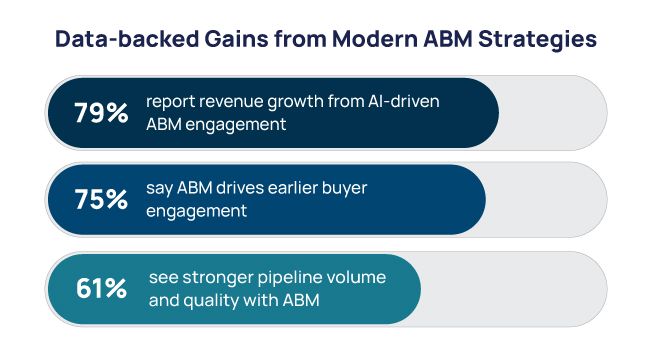
Addressing Key ABM Challenges with Strategic Solutions
Account-based marketing offers a focused way to engage high-value prospects, yet many organizations find execution demanding. Teams must identify the right accounts, align internal stakeholders, maintain consistent engagement across channels, and deliver personalized experiences at scale. Without a structured approach, ABM initiatives can become fragmented, resource-heavy, and difficult to measure.
When these challenges are addressed with the right strategy and support, ABM programs become more efficient, coordinated, and outcome-driven.
Here are some common ABM challenges and how Machintel helps address them with focused solutions:
Turning Account Selection into a Strategic Advantage
Many organizations begin ABM by identifying companies that match their ideal customer profile. However, ICP data alone rarely reflects real buying readiness or current market demand. Marketing teams often invest time targeting accounts that appear suitable on paper but show little intent to engage, which reduces campaign efficiency.
Machintel addresses this challenge by helping organizations identify and prioritize high-value accounts with greater precision. By combining firmographic intelligence, behavioral signals, and intent data, Machintel helps teams focus their efforts on accounts most likely to engage. This targeted approach allows marketing and sales teams to concentrate resources on opportunities that align with growth priorities.
Strengthening Sales and Marketing Coordination for ABM
ABM success depends on strong collaboration between sales and marketing teams. In many organizations, these teams operate with different metrics, processes, and communication styles. This lack of alignment often leads to inconsistent messaging, missed opportunities, and fragmented account engagement.
Machintel supports organizations in building coordinated ABM strategies that bring sales and marketing together around shared account goals. Through integrated account insights, structured planning, and coordinated outreach strategies, Machintel helps both teams operate with a unified approach. This alignment improves communication with target accounts and strengthens the effectiveness of ABM campaigns.
Producing Account-specific Content at Scale
Effective ABM requires messaging tailored to the priorities and challenges of each account. Creating this level of relevance demands significant research and content production. As the number of target accounts grows, marketing teams often struggle to maintain the same level of personalization.
Machintel helps organizations build structured ABM content strategies that align messaging with account insights and buyer roles. By developing targeted content frameworks and account-focused assets, Machintel helps teams deliver relevant communication without overwhelming internal resources. This approach keeps messaging meaningful while supporting scalable ABM programs.
Coordinating Engagement Across Multiple Marketing Channels
ABM programs often rely on several channels including digital advertising, email campaigns, content distribution, and events. Managing consistent messaging across these channels can become complicated, especially when outreach must remain personalized for each account.
Machintel helps organizations orchestrate multichannel engagement strategies that maintain clarity and consistency across all touchpoints. By aligning campaigns across digital platforms, targeted advertising, and direct engagement initiatives, Machintel enables brands to present a unified message that resonates with decision makers throughout the buying process.
Scaling ABM Programs Without Losing Personalization
Personalization sits at the core of ABM success. However, maintaining tailored engagement becomes challenging as ABM programs expand to include more accounts. Marketing teams often face a trade-off between scale and personalization.
Machintel addresses this challenge by enabling scalable personalization frameworks. Through structured segmentation, targeted campaign design, and coordinated engagement strategies, Machintel helps organizations grow their ABM initiatives while maintaining relevant and meaningful interactions with each account.
Transforming ABM Data into Clear, Actionable Insights
ABM generates large volumes of engagement data from multiple marketing and sales systems. Many teams struggle to translate this information into practical insights that guide campaign adjustments and account strategies.
Machintel helps organizations integrate advanced analytics into their ABM initiatives. By consolidating engagement data and tracking account activity across channels, Machintel provides clearer visibility into account behavior and campaign performance. These insights allow teams to refine their targeting, strengthen engagement strategies, and drive measurable results from their ABM programs.
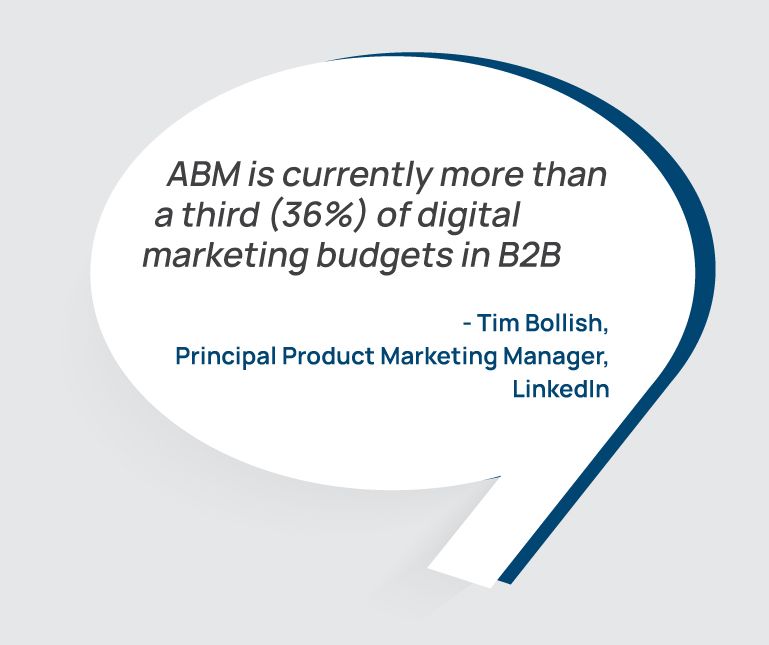
How to Create an Account Based Marketing Strategy
Account-based marketing works best when marketing and sales share the same approach to targeting and winning accounts. Instead of treating marketing and sales as separate functions, both teams operate as a unified account team that focuses on a defined group of companies. Marketing directs budget and campaigns toward the accounts sales considers most valuable, while both teams agree on messaging, execution plans, and performance metrics. This shared structure helps organizations concentrate resources on accounts with strong revenue potential and guide buying groups through a coordinated experience.
Here are the key steps to build an effective ABM strategy:
Identify Priority Accounts
Start by defining the companies you want to target. Review your existing customer base to identify organizations that generate strong revenue, maintain long-term relationships, and gain measurable value from your solution. These companies often represent the best fit for your ideal customer profile. At the same time, analyze new organizations that match the same characteristics and may have a clear need for your offering. Website visitor identification tools, CRM data, and marketing platforms can reveal companies already showing interest in your product or service.
Build and Expand Account Data
After identifying potential companies, gather deeper data about them. Look at website activity, email engagement, and CRM insights to understand which organizations interact with your brand. Visitor identification tools can highlight companies browsing your site but not yet converting. This activity often signals early interest and provides a starting point for targeting companies that already recognize the problem your solution addresses.
Segment and Tier Target Accounts
Once the account list grows, segment companies into tiers based on their potential value and readiness to engage. High-value accounts with strong buying signals may receive the most personalized outreach, while others enter broader campaigns. During this step, teams also begin identifying relevant contacts within those organizations by reviewing company websites, professional networks, and industry communities.
Map the Buying Committee
Most B2B purchases involve multiple stakeholders who influence the final decision. Identifying these individuals helps teams understand how decisions happen inside each account. Roles may include executives, department leaders, operational managers, and financial stakeholders. Each person evaluates the purchase from a different perspective, so understanding their priorities helps guide messaging that supports internal alignment across the buying group.
Rank Accounts by Intent and Engagement
Not every account shows the same level of interest. Some companies repeatedly visit your site, interact with your content, or ask questions in professional forums. These signals often indicate active research for a solution similar to yours. By evaluating engagement patterns and buying signals, teams can rank accounts and focus early outreach on organizations most likely to move forward.
Develop Personalized Content
Content plays a central role in ABM. Marketing teams create resources that address the specific challenges faced by each account or stakeholder group. This may include targeted emails, industry reports, blog posts, case studies, or white papers. The goal is to provide practical insight that helps decision-makers evaluate their options while positioning your company as a knowledgeable partner.
Align Messaging with Personas and Accounts
Once content is developed, messaging must connect directly with the stakeholders who will receive it. Campaigns should reflect the priorities of both the account and the individual role within the organization. Personalization extends beyond the message itself to include the delivery method, the timing of communication, and the broader campaign structure.
Select the Right Engagement Channels
Different stakeholders rely on different channels to research solutions. Some engage through professional networks such as LinkedIn, while others prefer webinars, email updates, events, or targeted digital advertising. A strong ABM program identifies where decision-makers spend time and uses those channels to deliver relevant content and outreach.
Create a Coordinated Execution Plan
A documented playbook helps sales and marketing coordinate activities across accounts. This plan outlines roles, responsibilities, outreach timing, and campaign cadence. By mapping communication touchpoints to specific channels and messages, teams maintain consistency while managing multiple accounts at different stages of the buying process.
Launch Personalized Engagement
With campaigns and outreach plans defined, teams begin interacting directly with accounts. This engagement often combines digital campaigns, direct outreach, events, and relationship-driven introductions. In many cases, shared connections, industry relationships, or common professional backgrounds help open conversations and strengthen engagement within target accounts.
Measure Performance and Optimize
ABM success is measured at the account level rather than through individual leads. Teams track metrics such as account engagement, meetings scheduled, opportunities created, pipeline progression, and revenue generated from target companies. Because enterprise buying cycles can take time, performance analysis focuses on long-term movement through the purchase process, with strategy adjustments made based on engagement trends and results.
Evaluate ROI and Expand the Program
When executed well, ABM often produces strong returns because resources focus on high-value accounts. Many B2B marketing teams report stronger ROI compared with traditional lead-generation programs. Over time, performance insights help refine account selection, improve targeting methods, and expand the program to additional high-value companies.
Future Scope
Account-based marketing continues to evolve as B2B organizations focus on deeper engagement with high-value accounts. The next phase of ABM centers on two areas: smarter account identification and stronger personalization. Artificial intelligence and automation are playing a growing role in both. AI-driven tools can analyze CRM data, intent signals, and engagement patterns to identify accounts that show strong buying interest. This approach helps marketing and sales teams prioritize the right prospects and engage them at the right time. Machine learning and predictive analytics also support personalization at scale by tailoring messaging, content, and outreach to specific stakeholders within an account based on behavior, industry context, and buying stage. At the same time, as privacy regulations continue to evolve, ABM strategies increasingly rely on first-party data and responsible data practices to deliver targeted experiences while maintaining compliance.
Engaging high-value accounts through ABM can require significant time, planning, and coordination across teams. Many organizations face challenges in identifying the right accounts, creating personalized campaigns, and managing engagement across multiple touchpoints. Machintel helps address these challenges by supporting businesses with structured ABM strategies designed to reach and engage priority accounts more effectively. With data-driven insights, tailored outreach programs, and dedicated support, Machintel enables organizations to strengthen engagement with key prospects and drive measurable outcomes. Organizations looking to refine their ABM strategy or improve engagement with high-value accounts can contact Machintel to learn more about its ABM services.
Future Outlook
Demand generation and lead generation continue to develop toward sharper targeting, deeper personalization, and smarter use of data. AI now plays a central role in identifying and prioritizing prospects. It analyzes behavioral and firmographic signals to predict intent, highlight high value accounts, and guide outreach strategies.
AI-powered chatbots engage website visitors in real time, predictive models surface prospects likely to convert, and automated scoring accelerates qualification while reducing manual effort. Personalization has progressed alongside this shift. Buyers expect messaging aligned to their industry, role, and immediate priorities. Broad outreach steadily loses impact. ABM enables organizations to concentrate on high value accounts and shape campaigns around verified intent signals and known challenges. Content, emails, and ads align to specific accounts through focused one to one or one to few programs built around real buying context.
Intent data adds greater precision. Instead of relying on static firmographic profiles, teams can act on live buying signals such as site visits, content engagement, and keyword research. These insights help prioritize accounts actively exploring solutions. Timely follow ups and coordinated cross channel campaigns direct resources toward prospects demonstrating clear purchase momentum.
For organizations aiming to strengthen B2B demand generation and lead generation performance, expert execution drives measurable results. Delays can translate into missed opportunities and rising acquisition costs. Partnering with Machintel provides access to proven strategies, advanced targeting capabilities, and data driven campaign execution designed to support sustained growth, stronger buyer relationships, and meaningful cost efficiencies. Connect with the Machintel team to build a resilient, high performing pipeline.
FAQs
What is demand generation in B2B?
It’s a marketing approach focused on building awareness and trust with potential buyers before they enter an active buying cycle. Instead of pushing for immediate conversions, you educate decision-makers and stay visible until they’re ready to engage with sales.
Which is better demand gen or lead gen?
They serve different purposes. One builds long-term market interest and brand preference, while the other captures contact information from prospects showing intent. Most companies see stronger pipeline results when they connect both efforts instead of choosing one.
What is lead generation in marketing?
Lead generation in marketing refers to the process of attracting and capturing interest from potential customers to build a sales pipeline. It typically involves collecting contact information through forms, events, content offers, or campaigns. The goal is to convert interest into qualified prospects for the sales team.
When to use demand generation?
Use it when you need to create interest in a new category, shorten long sales cycles, or reach buying committees that require education. It’s also useful when outbound sales alone aren’t producing enough qualified conversations.
How demand generation supports lead generation?
It warms up your audience before you ask for their details. When prospects already recognize your expertise, they convert at higher rates and enter the funnel with clearer intent and stronger alignment.
How to build a B2B demand generation strategy?
Start with a clearly defined ideal customer profile and map the buying process across stakeholders. Develop educational content for each stage, distribute it through relevant channels, and align marketing with sales around shared pipeline metrics.