Are your campaigns driving activity but not revenue? Full-funnel demand generation builds progression, and B2B revenue marketing measures real impact. Want the method? Read the blog.
The Ultimate B2B Demand Generation Guide for 2026
Demand
Feb 8, 2026

B2B Demand Generation in a Market That Scrolls and Forgets
B2B demand generation sits in the space between effort and outcome. Marketing teams run campaigns, drive traffic, and spend budget, yet sales still struggle with lead quality and timing.
The reason is simple.
B2B buying takes time, involves multiple stakeholders, and rarely follows a straight path.
Demand generation focuses on building interest early, educating buyers consistently, and earning trust long before a purchase decision is made. It keeps the brand visible and credible while buyers move in and out of active consideration.
In 2026, this approach becomes unavoidable.
AI has increased content volume, costs are rising, and attention is limited. Most ideal buyers are not in the market today, but they are forming opinions quietly. Demand generation targets that future demand by shaping memory, trust, and familiarity over time.
That long view is familiar to teams like Machintel, where demand generation work spans decades and thousands of campaigns, reinforcing that pipeline health is built through patience, timing, and repetition.
When it works, leads arrive better informed, sales conversations start stronger, pipelines become more predictable, and pricing pressure eases. Instead of chasing short-term conversions, teams build steady momentum that compounds across quarters.
Demand Gen Vs Lead Gen: Distinct Roles in the B2B Funnel
B2B demand generation and lead generation both support revenue growth, but they address different objectives. Demand generation shapes buyer interest across the entire journey, while lead generation captures and qualifies prospects who show near-term intent and readiness to engage with sales.
Demand generation is broader and strategic. It builds awareness, trust, and relevance over time. Lead generation is narrower and tactical. It focuses on converting existing interest into identifiable, sales-ready contacts. Demand generation comes first and continues throughout the funnel. Lead generation activates when intent becomes clear. That distinction matters in practice, which is why teams such as Machintel work across demand and lead generation, building awareness over time and stepping in with precision when buyers are ready to engage.
| Area | Demand Generation | Lead Generation |
|---|---|---|
| Core Purpose | Build awareness, interest, and long-term buyer relationships | Fill the funnel with prospects ready for near-term sales engagement |
| Funnel Scope | Covers the full buyer journey, from problem awareness to post-purchase | Focuses on mid to bottom funnel activity |
| Buyer Intent | Targets early- and mid-stage buyers, including those without active budget | Targets buyers with current need and clearer purchase intent |
| Strategic vs. Tactical | Strategic, ongoing program that shapes market perception | Tactical, campaign-driven execution |
| Primary Outputs | Engagement, education, pipeline acceleration | Form fills, demo requests, content downloads |
| Role in Revenue | Creates and sustains demand that feeds future pipeline | Converts demand into qualified sales opportunities |
| Relationship to the Other | Encompasses lead generation as one component | Depends on demand generation to be effective |
How the Two Strategies Connect
B2B demand generation and lead generation work best as a connected system. Demand generation builds interest and trust by keeping your brand visible and guiding buyers through their decision process, while lead generation captures intent when prospects are ready to engage.
At Machintel, this connection is supported end to end. With over 25 years of experience and more than 4,000 campaigns run each year, Machintel helps you create a steady, sustainable pipeline by addressing early-stage interest through targeted outreach and content, then converting that interest into qualified leads through precise list building, lead nurturing, and appointment setting.
This integrated approach improves lead quality, reduces wasted sales effort, and gives your sales team access to prospects who are informed, engaged, and prepared for meaningful conversations.
Understanding a Demand Generation Framework
B2B demand generation follows a structured process that helps you attract the right accounts, build interest over time, and support sales with better qualified opportunities. Each stage plays a clear role in moving buyers closer to a decision while keeping marketing and sales aligned.
Here is how the process typically works:
Step 1: Define the Right Buyers to Target
This stage focuses on clarity. You identify who you want to reach and what problems matter most to them so your efforts stay relevant from the start.
This clarity guides every activity that follows.
- Market research to understand buyer roles, priorities, search behavior, and common challenges
- Customer surveys to learn directly from existing clients about motivations and expectations
- Website analytics to review visitor behavior, traffic sources, and high intent pages
- Social media insights to understand audience demographics and content engagement patterns
Step 2: Introduce Your Brand to the Market
Once you understand your audience, you focus on visibility. The goal is to make your brand and message familiar to buyers before they enter an active buying phase.
Awareness sets the stage for future engagement:
- Educational content that addresses common industry problems
- Social media activity that shares insights and builds credibility
- Email outreach that keeps your brand top of mind
- Events and webinars that position your team as knowledgeable and accessible
Step 3: Build Ongoing Interest and Trust
After initial engagement, you continue the conversation. This step focuses on staying relevant as buyer needs evolve over time.
Consistent value keeps prospects connected:
- Email campaigns that share practical guidance and timely insights
- Audience segmentation so content aligns with buyer intent and role
- Personalized messaging based on how leads interact with your content
- Retargeting ads that reconnect with visitors who showed prior interest
Step 4: Prioritize Sales-ready Opportunities
As engagement increases, you assess which leads deserve direct sales attention. Qualification helps you focus time and resources on the right prospects.
This step protects sales efficiency:
- Clear criteria that define your ideal customer profile
- Lead scoring based on behavior, fit, and engagement level
- Data collection through forms, demos, or discovery conversations
- Centralized tracking using a CRM to monitor progress and outcomes
Step 5: Support Sales Through Conversion
At this point, sales take the lead with marketing support. The focus shifts to addressing objections, confirming value, and closing opportunities.
Collaboration matters most here:
- Sales outreach informed by prior engagement data
- Structured movement from qualified lead to active opportunity
- Feedback from sales that helps marketing refine targeting and messaging
The Six Stages That Power an Effective Demand Generation Funnel
Demand generation works best when you align your message with how buyers think and act at each point in their decision process. You segment this process into clear stages, each tied to a different mindset, need, and expectation. Your success depends on how well you engage, educate, and support buyers as they move forward.
Here are the key stages of the demand generation funnel, reframed for clarity and action:
Identifying the Problem
At this stage, buyers realize something is not working, but they lack clarity on the cause or solution. Your role is to help them name the problem and understand its impact. You focus on visibility and relevance, meeting buyers where they already search for answers. Educational content like blogs, explainers, short videos, and social posts helps you address common pain points and position your brand as a helpful source, not a seller.
Exploring Possible Solutions
Buyers now actively seek ways to address the problem. They want context, perspective, and guidance. This is where you deepen engagement by sharing insights that explain how different approaches work. Thought leadership, webinars, guides, and interactive content help you demonstrate your expertise and build confidence in your point of view. Your goal is to stay top of mind while buyers assess what type of solution fits their needs.
Comparing Options
In this stage, buyers narrow their choices and compare vendors. They look for proof, detail, and differentiation. You support this evaluation by providing case studies, product overviews, comparisons, and demonstrations. Your content should speak directly to your buyer’s specific challenges and explain how your offering addresses them better or differently than alternatives.
Gaining Confidence
Buyers are close to choosing and want reassurance. They may request pricing, trials, or direct conversations with sales. You help remove doubt through testimonials, demos, pilot programs, and clear answers to common objections. Your focus is to support buying intent and help buyers feel confident about moving forward with you.
Completing the Action
Here, buyers convert into customers. Your priority is clarity and ease. You provide straightforward pricing, purchase steps, onboarding details, and access to support. A smooth experience matters, as friction at this point can delay or stop conversion. Your aim is a clean transition from prospect to customer.
Building Long-term Value
After purchase, your work continues. Retention focuses on helping customers succeed and see ongoing value from your product or service. You support this through onboarding resources, product updates, training sessions, and customer-only content. Strong retention leads to renewals, expansion, and referrals, feeding new demand back into your funnel.
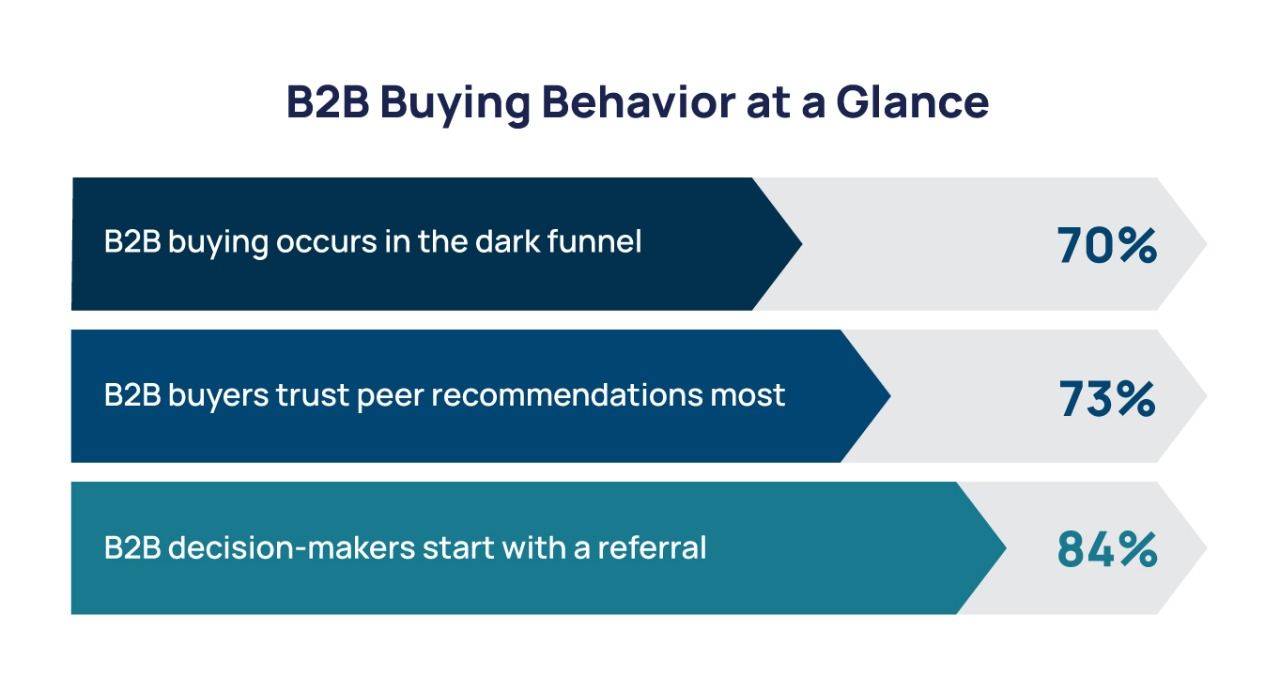
A Proven Approach to Building a B2B Demand Generation Strategy
A B2B demand generation strategy works best when it connects goals, buyers, content, channels, and measurement into one clear system. This framework merges core steps with proven best practices so you can move from planning to execution without overlap or noise.
Let’s explore:
Start with a Clearly Defined Audience
Your strategy should begin with a tight understanding of who you want to attract.
- Identify your Ideal Customer Profile using real customer data
- Analyze shared traits across your best-fit accounts
- Map roles, seniority, pain points, and buying context
- Validate assumptions with sales and customer feedback
- Revisit your audience definition as your product or market shifts
Set Goals That Guide Every Decision
Goals give structure to demand generation and keep teams aligned.
- Connect demand goals to business priorities like pipeline or revenue
- Translate priorities into specific outcomes such as MQL volume or conversion rate
- Use measurable targets with defined timelines
- Reference past performance and industry benchmarks
- Track progress using KPIs tied directly to each goal
Research the Market and Competition
You need context to position your message and offer effectively.
- Study competitor messaging, channels, and content focus
- Identify gaps your competitors are not addressing
- Track category trends and buyer behavior changes
- Use surveys, interviews, and analytics to support decisions
- Update research regularly to stay relevant
Build Buyer Personas Your Sales Team Will Recognize
Personas help you shape campaigns around real buying behavior.
- Define roles, responsibilities, and decision influence
- Document challenges, objections, and priorities
- Capture goals that drive purchase decisions
- Align personas with stages of the buying process
- Keep personas practical and easy to use across teams
Create Content with a Clear Purpose
Content should support demand goals, not exist on its own.
- Map content to awareness, consideration, and decision stages
- Focus on topics your buyers actively care about
- Use multiple formats such as blogs, guides, case studies, and video
- Maintain consistent messaging across channels
- Review performance and refine based on engagement and conversions
Use Multiple Channels to Reach Buyers
Strong demand generation meets buyers where they already spend time.
- Combine organic, paid, and owned channels
- Balance search, social, email, events, and partnerships
- Match channels to buyer preferences and intent level
- Avoid spreading effort too thin across platforms
- Reallocate spend based on performance data
Capture and Nurture Leads Systematically
Lead generation and nurturing should work as one flow.
- Use focused offers that match buyer intent
- Design simple paths from interest to conversion
- Segment leads by behavior, role, or account
- Personalize follow-ups based on engagement
- Maintain close coordination between marketing and sales
Use Automation to Scale Without Losing Focus
Automation supports consistency and speed across campaigns.
- Run email and campaign workflows based on behavior
- Score leads to highlight sales-ready prospects
- Maintain clean data in your CRM
- Monitor performance across the funnel
- Adjust messaging and timing based on results
Measure, Test, and Refine Continuously
Demand generation improves through steady review and adjustment.
- Track performance against original goals
- Monitor traffic, conversion rates, engagement, and pipeline impact
- Identify friction points in forms, pages, or messaging
- Test changes before overhauling campaigns
- Share learnings across marketing and sales teams
Effective Channels for Consistent B2B Demand Generation
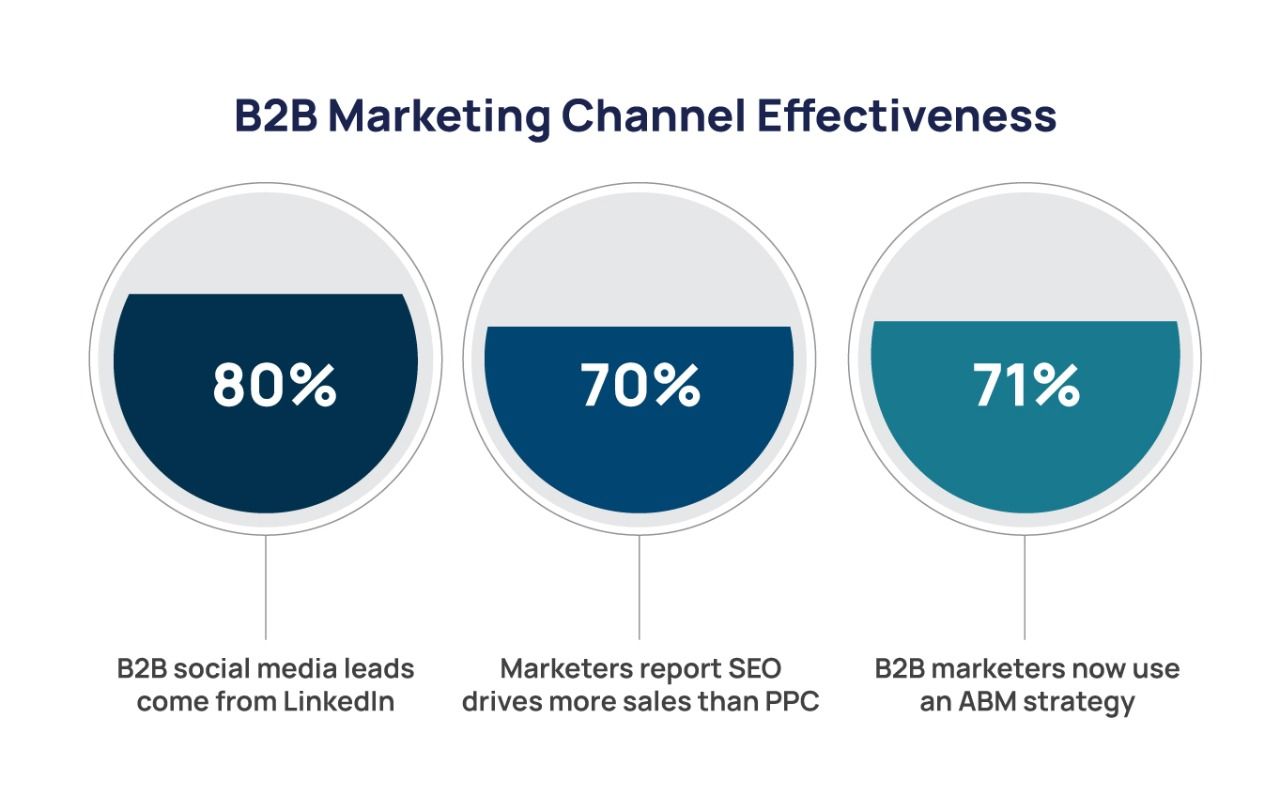
Some channels drive pipeline, others drain effort. This strategy focuses on channels that show consistent results based on buyer behavior and performance data.
Here are the channels that matter most:
Content Syndication: This channel extends your reach through publishers your buyers already trust. Many marketers report strong outcomes from content syndication and continue investing in it. Syndicating eBooks and whitepapers through industry platforms helps you capture qualified leads while benefiting from publisher credibility.
Organic Search: Organic search supports long-term demand by capturing high intent traffic. Buyers searching for solutions signal readiness. After the content investment, traffic comes at no incremental cost and compounds over time. Many marketers consider organic search a primary lead source for sales and marketing.
LinkedIn: LinkedIn remains the strongest social channel for B2B. Decision makers actively engage with business content, thought leadership, and targeted ads. It consistently ranks as a leading platform for reaching executives and senior stakeholders.
Email: Email continues to perform when relevance leads the approach. Buyers expect insights aligned to their role and challenges, not broad newsletters. Segmentation outweighs frequency. Many businesses view email as one of their most effective demand generation channels.
Webinars: Webinars work when they teach something useful. Buyers prefer practical frameworks, data, and real examples over sales focused sessions. Many decision makers favor case-based learning formats, and strong webinars build authority before sales conversations begin.
Partnerships: Partnerships with complementary vendors or industry publications expand reach through shared trust. Co-branded content often carries more credibility than solo efforts. When prospects see your brand aligned with a respected partner, engagement increases.
Multi-channel Focus: Multi-channel campaigns often outperform single channel efforts. Companies using multiple mid funnel channels tend to see stronger engagement. Results improve when channels match buyer behavior. If your audience does not use a channel, skip it. Focus consistently outperforms broad presence.
The Road Ahead
The future of demand generation points to a faster, more buyer-led model shaped by AI, video, first-party data, and open access to content.
AI and predictive analytics help you identify in-market accounts earlier by interpreting behavior signals instead of waiting for form fills, which improves targeting and reduces wasted spend.
Short-form video has become a preferred way for B2B buyers to learn, making complex ideas easier to understand while adding a human element to brand communication.
As third-party cookies fade, first-party data becomes central to demand gen, giving you more accurate insights and enabling personalization that buyers expect.
The move away from gated content reflects a broader shift in buyer trust, where sharing value upfront drives credibility, engagement, and long-term intent. Together, these shifts signal a demand gen approach focused on relevance, speed, and respect for how people buy.
FAQs
What is B2B demand generation?
B2B demand generation is the process of creating awareness and interest in your company’s products or services among other businesses. It focuses on educating your target audience, building trust, and guiding them through the buying process. The goal is to generate qualified interest that turns into pipeline and revenue.
Why is demand generation important for B2B?
B2B buying cycles are long and involve multiple decision-makers, so you need consistent visibility and credibility. Demand generation helps you stay top of mind, shape buyer preferences early, and build a steady flow of qualified opportunities. It also aligns marketing and sales around measurable pipeline growth.
How is demand generation different from lead generation?
Demand generation builds awareness and interest across the full buyer journey, often before someone is ready to share their contact details. Lead generation focuses on capturing contact information from prospects who show buying intent. In short, demand generation creates interest; lead generation captures it.
How to build a B2B demand generation strategy?
Start by defining your ideal customer profile and mapping their buying journey. Create content and campaigns that address each stage, from awareness to decision, across channels like search, email, social, and events. Track performance based on pipeline and revenue impact, and adjust based on what drives qualified opportunities.
How do you use intent data for B2B demand generation campaigns?
You can use intent data to segment high-interest accounts and trigger targeted ads, emails, or sales outreach. Match intent topics with relevant content to address specific pain points. This approach increases relevance and improves engagement across the funnel.