Only 21% of surveyed content teams can see beyond signup into retention, churn, or expansion (Superpath, 2025). The attribution chain breaks in four places before leadership ever asks about pipeline. A four-step architecture (source tagging, CRM campaign association, cohort reporting, account-level influence tracking) builds the chain that connects delivery to closed revenue. It must be configured before the first contact is delivered.
Content Syndication ROI Measurement: The Attribution Fix
Content
Nov 16, 2026

The demand gen team delivers 400 contacts in Q1. Sales closes a $2M quarter. Nobody can draw a line between the two in a system the CFO trusts. The syndication program gets cut at the next planning cycle. Not because it failed, but because content syndication ROI measurement was never built into the program.
This is the ‘ROI Conversation Gap’. It is the most consistent reason B2B syndication programs lose budget they should keep.
Why Content Syndication ROI Measurement Fails
Marketing defends the syndication program with the metrics it can measure: cost-per-lead and lead volume. Finance evaluates it with the metrics it uses: pipeline influenced, revenue contribution, cost per opportunity.
The two sets of numbers do not speak to each other. The demand gen director who answers “what pipeline did this generate?” with “we delivered 400 contacts at a $48 CPL” is not answering the question. The budget conversation is lost before it starts.
The underlying problem is that content syndication ROI measurement is not built into most programs. Attribution is treated as an analysis task that happens after the program ends, not an infrastructure requirement that must exist before the first contact is delivered. By the time leadership asks the pipeline question, the data to answer it does not exist.
Only 21% of surveyed content teams can see beyond signup into retention, churn, or expansion (Superpath, 2025). The rest are defending programs they cannot measure in a language leadership does not accept.
Being asked what pipeline a program produced, and having only a contact count to offer, makes it hard to hold on to a budget that deserves to stay. Machintel’s demand generation team works with B2B marketers on that gap, planning how results will be tracked in the client’s CRM before the program begins. The answer is then ready when finance asks.
Where the Attribution Chain Breaks
Content syndication attribution fails at four specific points. Each break compounds the next.
Incomplete source tagging at delivery: Contacts arrive in the CRM with name, title, company, and email. The fields required to trace a contact back to the originating program six months later are absent: program name, publisher, delivery date, content asset, audience segment, campaign ID. When an SDR engages that contact in Q3, the syndication program is invisible in the CRM record.
No campaign association at import: A contact record and a campaign record exist independently in the CRM until someone builds the connection. When syndication contacts are imported and immediately sequenced without creating the campaign member record, the attribution model has no mechanism to credit the originating program when pipeline closes. The connection must exist before the opportunity is created. It cannot be reconstructed reliably after the fact.
Attribution model design exclusions: First-touch attribution credits the first CRM interaction. Last-touch credits the action that created the opportunity. Neither model captures the contribution of a top-of-funnel program that ran nine months before the opportunity was created by an SDR working a contact from that program. Syndication outside the auto-association window earns no pipeline credit in standard configurations (Salesforce).
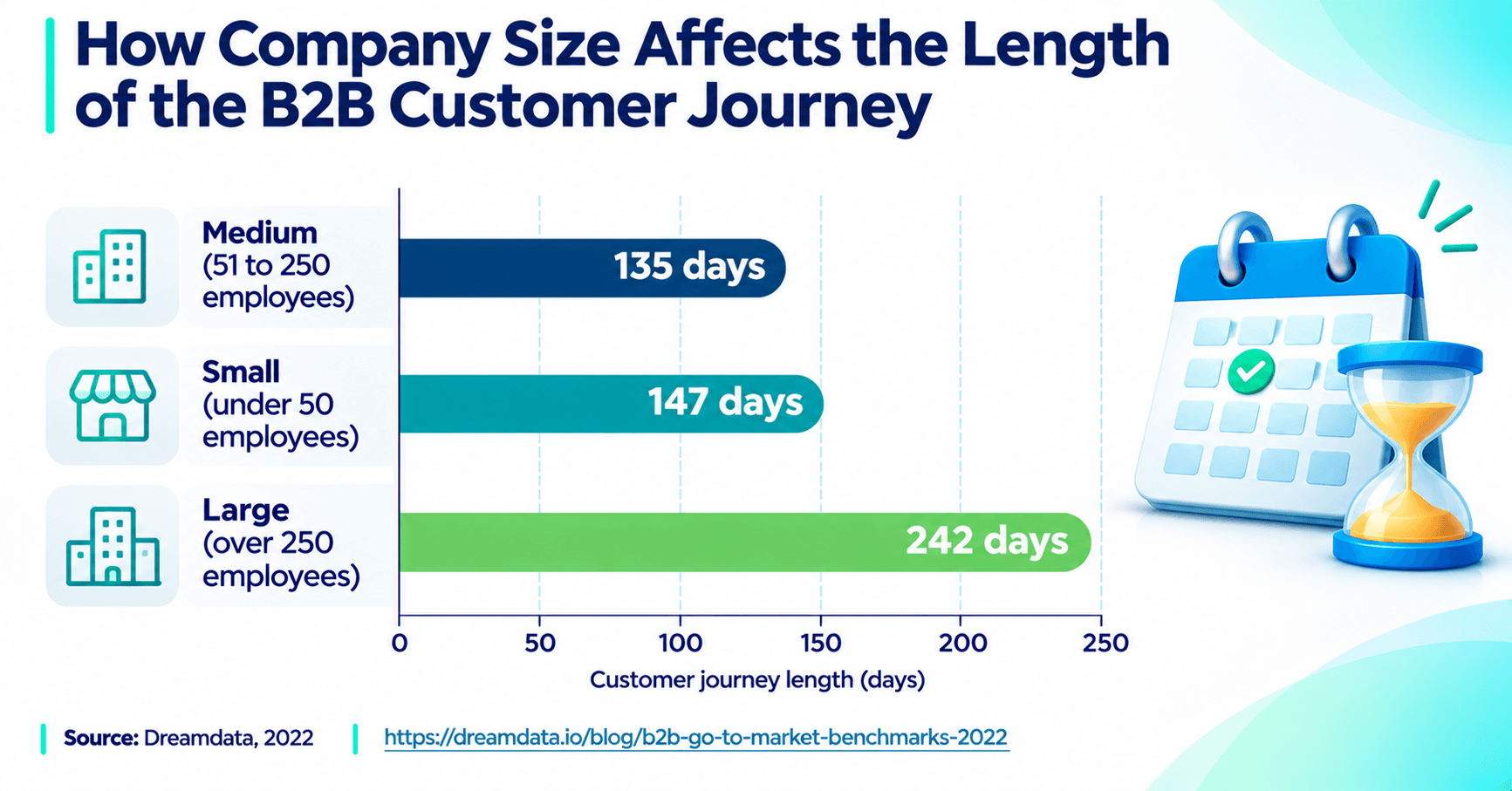
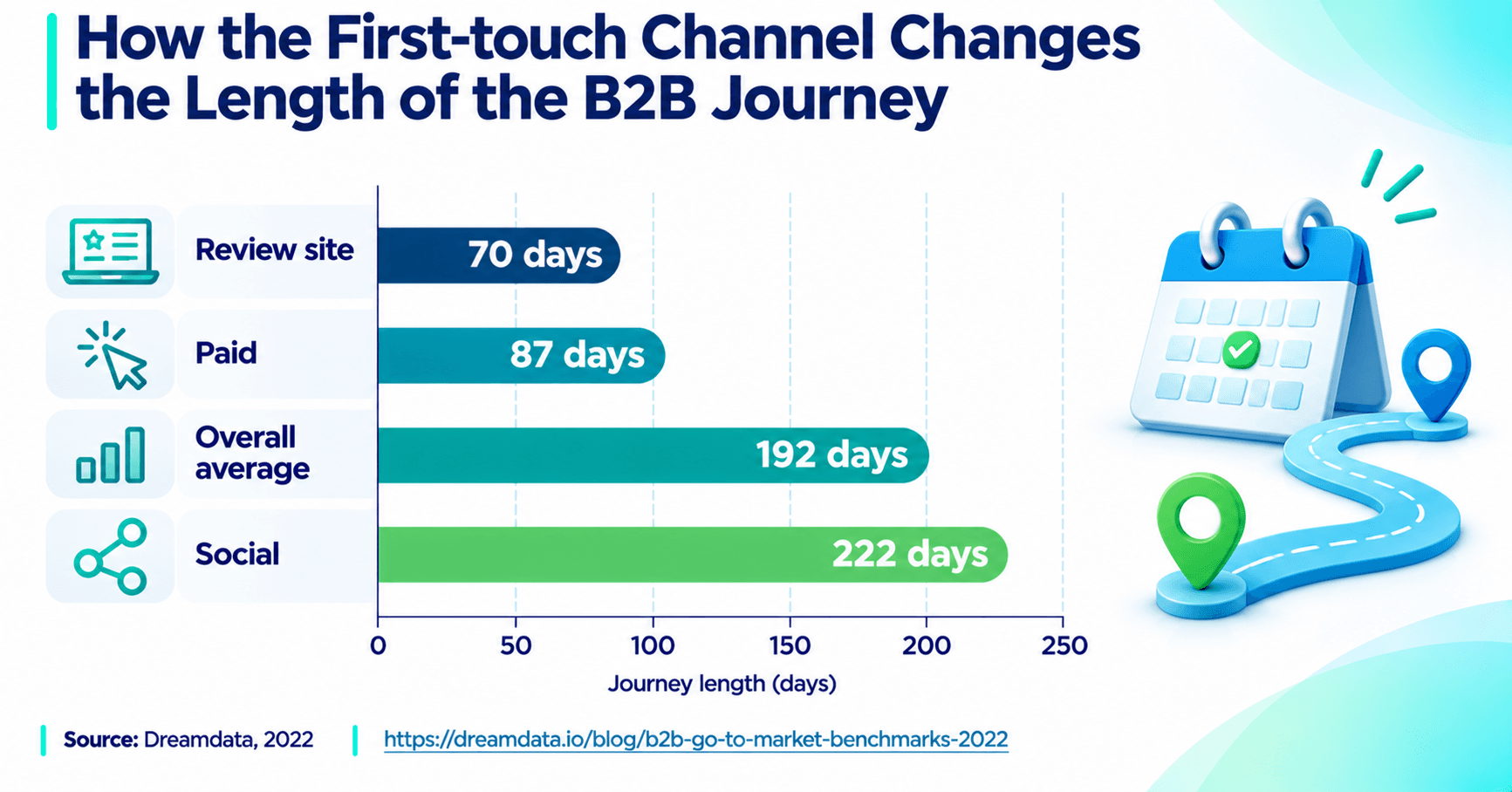
The time delay mismatch: The average B2B customer journey runs 272 days from first contact to closed deal (Dreamdata, 2026). A program evaluated on a 90-day reporting window will always look incomplete. Q1 contacts are invisible in Q1 pipeline reports. The program is judged on the wrong timeline and cut before the conversion window closes.
If you are running syndication programs and finding this pattern in your own measurement setup, Machintel helps you plan syndication program attribution from day one. See how the pipeline accountability model works.
The Four-step Attribution Architecture
Here are the four steps that build the chain from delivery to closed revenue:
Step 1: Source Tagging at Delivery
Define six required fields in the program brief before delivery begins: program name, publisher, delivery date, content asset title, audience segment, campaign ID. These fields must be in the contact delivery file from the vendor and mapped to CRM fields at import. Any contact missing more than two fields should be held for completion, not imported with gaps. This is a data requirement, not a best practice.
Step 2: CRM Campaign Association at Import
Every contact delivered through a syndication program must be associated with the campaign record in the CRM at the point of import, not after the opportunity is created. In Salesforce, this is a Campaign Member object. In HubSpot, this is campaign association with the source field populated. Without the campaign member record, demand gen ROI reporting cannot include the syndication program in pipeline credit, regardless of how many contacts from that program became opportunities.
Step 3: Cohort Reporting with a 12-month Window
Standard pipeline reporting runs from current date minus 90 days. Syndication attribution requires cohort reporting: group contacts by delivery date, then track pipeline and closed-won outcomes over 6 and 12 months from that date.
The reporting expectation must be specified at program approval, not introduced when leadership asks for results. A program approved with a defined 12-month cohort evaluation window is assessed against a benchmark leadership agreed to. A program evaluated against an improvised Q-on-Q comparison is defended from a weaker position.
A Q1 cohort evaluated in Q3 shows 6-month conversion data. Evaluated in Q1 of the following year, it shows 12-month data. These windows match the program’s long conversion cycle. B2B marketers with full-funnel attribution are 45% likely to significantly exceed their primary goals, versus 24% without it (Anteriad, 2026).
Step 4: Account-level Influence Tracking
In many B2B purchases, the syndication contact is not the economic buyer. Standard contact attribution gives the syndication program no credit when a different contact at the same account creates the opportunity. Account-level influence tracking credits the program when any deal closes at an account where a syndication contact was delivered in the preceding 12 months. This is influence credit, distinct from direct attribution, and it is the number that captures the full pipeline contribution of a top-of-funnel program.
Account-level influence attribution captures more program credit than contact-level first-touch attribution for content syndication programs.
The Behavioral Cluster Intent framework strengthens account-level influence claims by showing which named accounts had concentrated buying committee research activity during the syndication window, giving the influence attribution an independent check.
The ROI Presentation Framework
When the four steps are in place, marketing program attribution produces six numbers for a CFO-ready presentation:
Program investment: Vendor fees, content production, SDR time allocated to the cohort.
Contacts delivered and validated: Total delivered minus contacts that failed ICP validation.
SDR engagement metrics: Attempts, conversations, meetings booked from the cohort. This is the bridge between delivery and pipeline.
Pipeline influenced: Total open pipeline value at accounts where a syndication contact was delivered within the 12-month cohort window. Includes accounts where the syndication contact was not the direct opportunity source.
Closed-won attribution: Revenue at accounts with campaign member records that closed within the 12-month cohort window.
Channel cost comparison: Cost per influenced pipeline dollar versus other active demand generation channels. Content syndication can be a low cost-per-pipeline-dollar channel in the mix when syndication pipeline tracking is measured correctly. Compare cost per meeting from content syndication with cost per meeting from outbound SDR for mid-market B2B accounts.
These six numbers answer the three questions leadership actually asks: what pipeline did this generate, what revenue did it contribute, and could we have done this more cheaply through another channel.
What Machintel Sees Across 4,000+ Campaigns Annually
Across 4,000+ campaigns annually, the programs that survive budget reviews share one characteristic: attribution was configured before the first contact was delivered. Not reviewed after the program ended. Not reconstructed when leadership asked. Configured before delivery began.
The programs that lose budget despite strong performance share the opposite characteristic: the measurement conversation happened at the quarterly review, not at the program brief. By that point, the data to answer the CFO’s question does not exist and cannot be rebuilt accurately.
Machintel’s program-level reporting supports the attribution architecture: delivery records with timestamps and content asset attribution, account-level engagement summaries, and multi-contact account reports for buying committee tracking. The attribution chain beyond delivery (SDR conversion, pipeline influence, closed-won) is built in the client’s CRM. Machintel advises on the setup. The configuration is client-managed. The distinction matters: Machintel is a demand generation partner who supports attribution from the program side, not a reporting tool that replaces CRM-based measurement.
The ROI conversation is won or lost in the program brief. Not the quarterly report.
Want to see what finance-ready syndication attribution looks like? Talk to our team or explore our demand generation services.
FAQs
Why does content syndication ROI measurement fail in most B2B programs?
Attribution is treated as an analysis task after the program ends, not as infrastructure built before the first contact is delivered. Contacts arrive without the source tags, campaign member records, and reporting windows needed to connect delivery to closed revenue. By the time leadership asks about pipeline, the data to answer it does not exist.
How long should you wait before judging the pipeline impact of a content syndication program?
Evaluate each delivery as a cohort over 6 and 12 months from the delivery date, not on a standard 90-day reporting window. The average B2B customer journey runs 272 days from first contact to closed deal (Dreamdata, 2026). Agree on the evaluation window at program approval, so the program is judged against a timeline leadership has already accepted.
What numbers should a CFO-ready content syndication report include?
Six numbers: program investment, contacts delivered and validated, SDR engagement metrics, pipeline influenced, closed-won attribution, and channel cost comparison. Together they answer what pipeline the program generated, what revenue it contributed, and whether another channel could have done it more cheaply.