Standard B2B attribution only captures declared-intent signals: form fills, ad clicks, email opens. This covers 30-35% of marketing’s actual pipeline influence. The other 65-70% happens in the dark funnel and leaves no trackable signal. The four-layer Pipeline Accountability Model builds proxy measurement across account engagement scoring, ICP account coverage, pipeline velocity, and influenced pipeline to make dark funnel contribution visible and defensible without requiring direct tracking of the dark funnel itself.
Measuring Dark Funnel Influence: The Four-layer Model
Demand
Sep 27, 2026

In This Article
- Why Standard B2B Pipeline Attribution Captures Only 30-35% of Influence
- Layer 1: Account-level Engagement Scoring
- Layer 2: ICP Account Coverage
- Layer 3: Pipeline Velocity Modeling
- Layer 4: Influenced Pipeline
- The Budget Argument the Four-layer Model Enables
- What We See Across 4,000+ Campaigns Annually
- FAQs
The CMO presents the quarterly attribution report. The CRO says: “These 40 pipeline opportunities, most came through outbound or direct. Marketing’s number looks inflated.”
The CMO cannot argue. Her attribution model shows form-fill source data. It does not show the six weeks of editorial content the buying committee consumed before the SDR got a reply. It does not show the three peer community threads where the vendor was recommended. It does not show the AI research session that put the vendor on the initial shortlist.
Both of them are right. Both are looking at an incomplete picture.
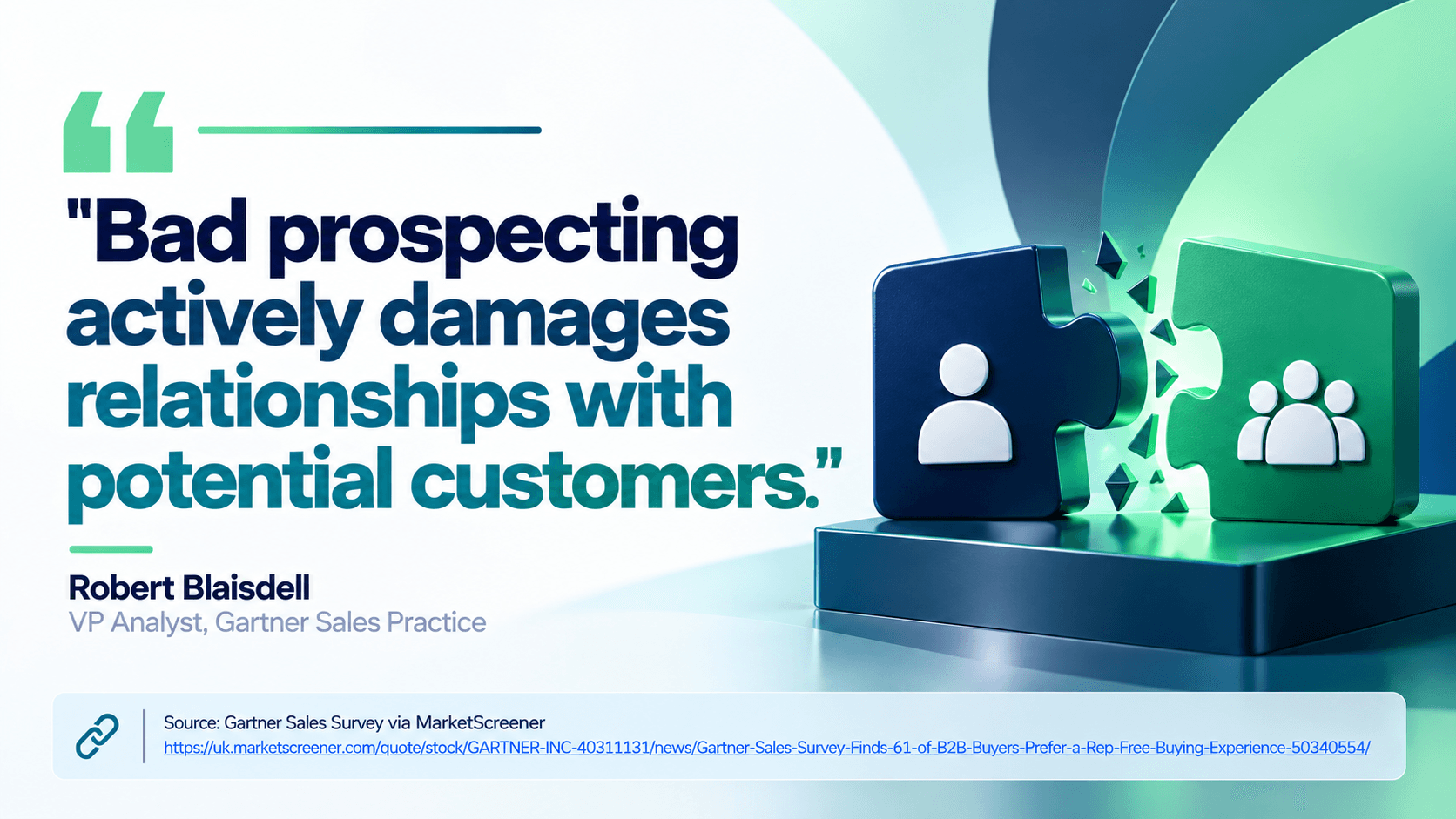
This scene plays out in B2B marketing teams every quarter. It is not a communication problem or a relationship problem between marketing and sales. It is a measurement problem: standard attribution is built to capture the last 30-35% of marketing’s pipeline influence and is systematically blind to the other 65-70%.
This is ‘The Attribution Gap’: the structural measurement problem where the channels that most influence pre-funnel shortlist formation produce no trackable signal, leaving demand gen programs unable to demonstrate the pipeline contribution they are actually making.
Why Standard B2B Pipeline Attribution Captures Only 30-35% of Influence
Standard B2B pipeline attribution is built around declared-intent signals. A buyer does something traceable: fills a form, clicks an ad, opens an email, attends a webinar. The CRM records the touchpoint. Attribution models assign credit based on the touchpoints they can see.
The research phase that precedes those signals produces none of them. 70% of the B2B buying process happens before a buyer contacts any vendor (6sense, 2024). That research phase, roughly eight months in most B2B purchases, is where shortlists form and vendor preferences are established. It happens in editorial publications, practitioner communities, AI research sessions, and peer conversations. None of those produce CRM touchpoints.
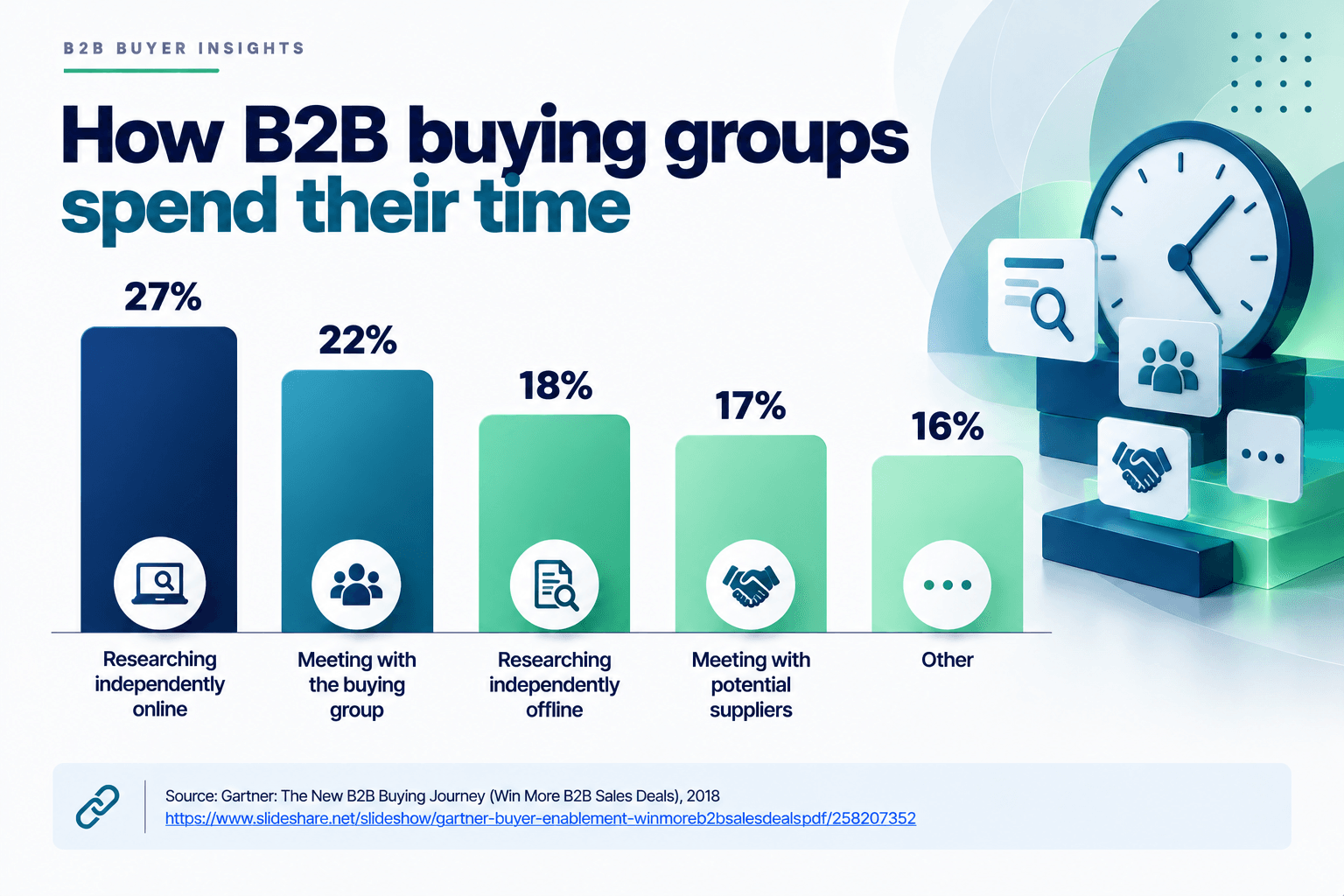
By the time a buyer fills a form or responds to an SDR, they have often already formed an initial vendor preference. The declared-intent signal the attribution model records is a late indicator: it confirms that the buyer has progressed to active evaluation, not that the marketing program caused the buyer to enter evaluation.
94% of B2B buying groups rank their vendor shortlist before engaging any vendor’s sales team (6sense, 2025). The shortlist formation happened in the dark funnel. The attribution model did not see it. It credits the last touchpoint before the form fill, which is almost never the channel that built the shortlist position.
The result: marketing programs that drive the majority of pipeline influence show up as responsible for a minority of attributed pipeline. Programs that intercept declared intent (paid search, retargeting, SDR outbound) show up with strong attribution numbers because they operate in the late stage of the buying process that the attribution model can see.
The Pre-Funnel Presence Framework is Machintel’s framework for building B2B vendor presence in the channels buyers use during the research phase. See how it works.
Layer 1: Account-level Engagement Scoring
The first proxy measurement layer shifts from contact-level attribution to account-level engagement scoring.
Standard attribution records individual contacts and their touchpoints. An account with one contact who filled a form looks the same in the CRM as an account with five contacts who engaged across multiple content types over three months. Both show as one pipeline entry with one attributed source.
Account-level engagement scoring aggregates all activity across all known contacts at a target account and scores the account on the volume, diversity, and recency of that engagement. An account with five contacts showing engagement signals across editorial content, webinars, and direct website visits over a 90-day window scores significantly higher than an account with a single form fill.
The scoring difference reveals buying committee engagement that single-contact attribution misses. B2B buying decisions involve 13 stakeholders on average (Forrester, 2024). A deal where only one committee member has a traceable touchpoint is a deal where the marketing program’s influence on the buying committee is substantially undercounted.
Account-level engagement scoring surfaces marketing-influenced pipeline that contact-level attribution misses. The gain is not better marketing performance but more complete measurement of existing performance.
Layer 2: ICP Account Coverage
The second proxy layer measures ICP account coverage: the percentage of target accounts in the defined ICP that have had any traceable touchpoint in a rolling 90-day window.
ICP account coverage is a leading indicator of future pipeline. When coverage is rising across the defined target account list, pipeline follows 6-8 weeks later as research-phase accounts progress to active evaluation. When coverage is flat or falling, pipeline gaps arrive 6-8 weeks later even if current form fill rates look stable.
The measurement requires a defined target account list, which most B2B programs with an ABM component already maintain. Running account-level touchpoint tracking against that list each week produces a coverage percentage that can be trended over time.
Coverage at 40% trending up toward 60% is a positive pipeline signal even when no additional form fills have appeared. Coverage at 60% trending down is a negative signal even when current pipeline looks healthy. The leading indicator value of ICP coverage is precisely that it measures what is coming rather than what has arrived.
Programs that track ICP account coverage alongside form fill rates have an earlier warning system for pipeline shortfalls and a more complete picture of marketing’s reach into the target account universe.
Layer 3: Pipeline Velocity Modeling
The third proxy layer compares pipeline velocity for accounts with pre-funnel touchpoints versus accounts without.
Accounts that encountered a vendor’s content, editorial presence, or practitioner perspective during the research phase enter evaluation with higher baseline familiarity. The sales conversation starts from a different position. The buying committee has more context. The vendor’s positioning is not new information. The evaluation cycle is shorter.
This velocity difference is measurable in any CRM that records opportunity creation date and close date. Segment closed deals into two groups: accounts with documented pre-funnel touchpoints before the opportunity was created, and accounts first encountered at declared intent. Compare average days-to-close for each segment.
The velocity differential is the measurable pipeline revenue impact of pre-funnel marketing activity. A program that shortens average deal cycle by 18 days across a pipeline of 40 deals is producing measurable revenue value that sourced attribution cannot capture.
Accounts with editorial exposure before opportunity creation tend to close faster, at higher values, and with less price pressure. The deal quality difference is the velocity model’s evidence base.
Layer 4: Influenced Pipeline
The fourth proxy layer is influenced pipeline attribution alongside sourced pipeline attribution.
Sourced pipeline attributes each deal to the channel that produced the first trackable signal: typically the channel that generated the initial form fill or SDR reply. This is the standard attribution metric most marketing teams report.
Influenced pipeline tracks every channel that had contact with the account before the deal closed, regardless of which channel produced the first signal. A deal sourced by SDR outbound but where four buying committee members consumed editorial content over the preceding six weeks appears in sourced attribution as an outbound deal. In influenced attribution, it appears as an outbound deal with editorial influence.
The difference between sourced pipeline and influenced pipeline is ‘The Attribution Gap’ in measurable form.
When marketing teams add influenced pipeline reporting alongside sourced pipeline, pre-funnel programs that show zero sourced attribution typically show significant influenced attribution. An editorial program that produced zero direct form fills shows up as influence on 25-35% of pipeline when influenced attribution is tracked across all accounts where buying committee members had editorial touchpoints.
That shift from zero to 25-35% influenced pipeline is the business case for pre-funnel investment, expressed in the revenue language that CROs and CFOs can evaluate.
The Budget Argument the Four-layer Model Enables
The four-layer Pipeline Accountability Model changes the budget conversation because it changes the evidence available.
With sourced attribution only: pre-funnel programs look like they have no return. Editorial, community, and AI citation programs produce no direct form fills. They get defunded. Declared-intent programs (paid search, retargeting, SDR outbound) show strong sourced attribution. They receive continued investment.
With the four-layer model: the evidence shifts. Account engagement scoring shows buying committee coverage that single-contact attribution misses. ICP account coverage shows that rising reach into the target account list is preceding pipeline arrivals by 6-8 weeks. Pipeline velocity data shows that accounts with pre-funnel exposure tend to close faster and at higher contract values. Influenced pipeline data shows that editorial and community programs touch a significant percentage of deals before they close.
The CMO in the quarterly attribution conversation now has a different set of data. The 40 pipeline opportunities are still there. The CRO’s question about marketing’s contribution is still valid. But the answer is no longer limited to form-fill source data. Influenced pipeline shows which deals had buying committee members with pre-funnel touchpoints. Velocity data shows those deals closed faster. Coverage data shows that the programs running pre-funnel produced the ICP reach that preceded the pipeline.
That is a defensible investment case. It is not available from form-fill attribution alone.
What We See Across 4,000+ Campaigns Annually
Machintel runs 4,000+ campaigns annually across B2B tech and SaaS. Clients tracking only sourced pipeline undercount marketing’s contribution by 40-60% compared to those tracking influenced pipeline alongside sourced attribution.
Machintel’s 33 owned editorial publications generate account-level engagement signals before target accounts declare intent.
For context on the dark funnel channels standard attribution cannot reach, see Fix the Dark Funnel Gap Before It Quietly Costs You the Next Deal.
FAQs
Why does standard B2B pipeline attribution only capture 30-35% of marketing’s influence?
Standard attribution only tracks declared-intent signals: form fills, ad clicks, email opens. The other 65-70% happens in dark funnel channels that leave no trackable signal.
What are the four layers of the Pipeline Accountability Model?
Account-level engagement scoring, ICP account coverage, pipeline velocity modeling, and influenced pipeline tracking. Each layer makes a different dimension of dark funnel contribution visible without requiring direct tracking.
How does influenced pipeline attribution differ from standard multi-touch attribution?
Influenced pipeline tags opportunities where a target account had marketing contact before the deal closed, using account-level matching rather than click-path tracking. No direct attribution signal required.