80% of B2B deals go to the vendor buyers preferred before contacting sales (6sense, 2025). But most pre-funnel presence programs target one channel, usually LinkedIn or editorial. Shortlist formation happens across five simultaneous channels: industry editorial, practitioner communities, LinkedIn organic from individual voices, AI research sessions, and peer referral networks. Vendors present in only one of the five are absent from the majority of shortlist formation moments.
Pre-funnel Presence: Five Channels Where B2B Shortlists Form
Demand
Sep 24, 2026

In This Article
- Channel 1: Industry Editorial Publications
- Channel 2: Practitioner Communities
- Channel 3: LinkedIn Organic from Individual Voices
- Channel 4: AI-indexed Editorial Content
- Channel 5: Peer Referral Networks
- The Timeline Problem and How to Measure Pre-funnel Presence
- What We See Across 4,000+ Campaigns Annually
- FAQs
Channel 1: Industry Editorial Publications
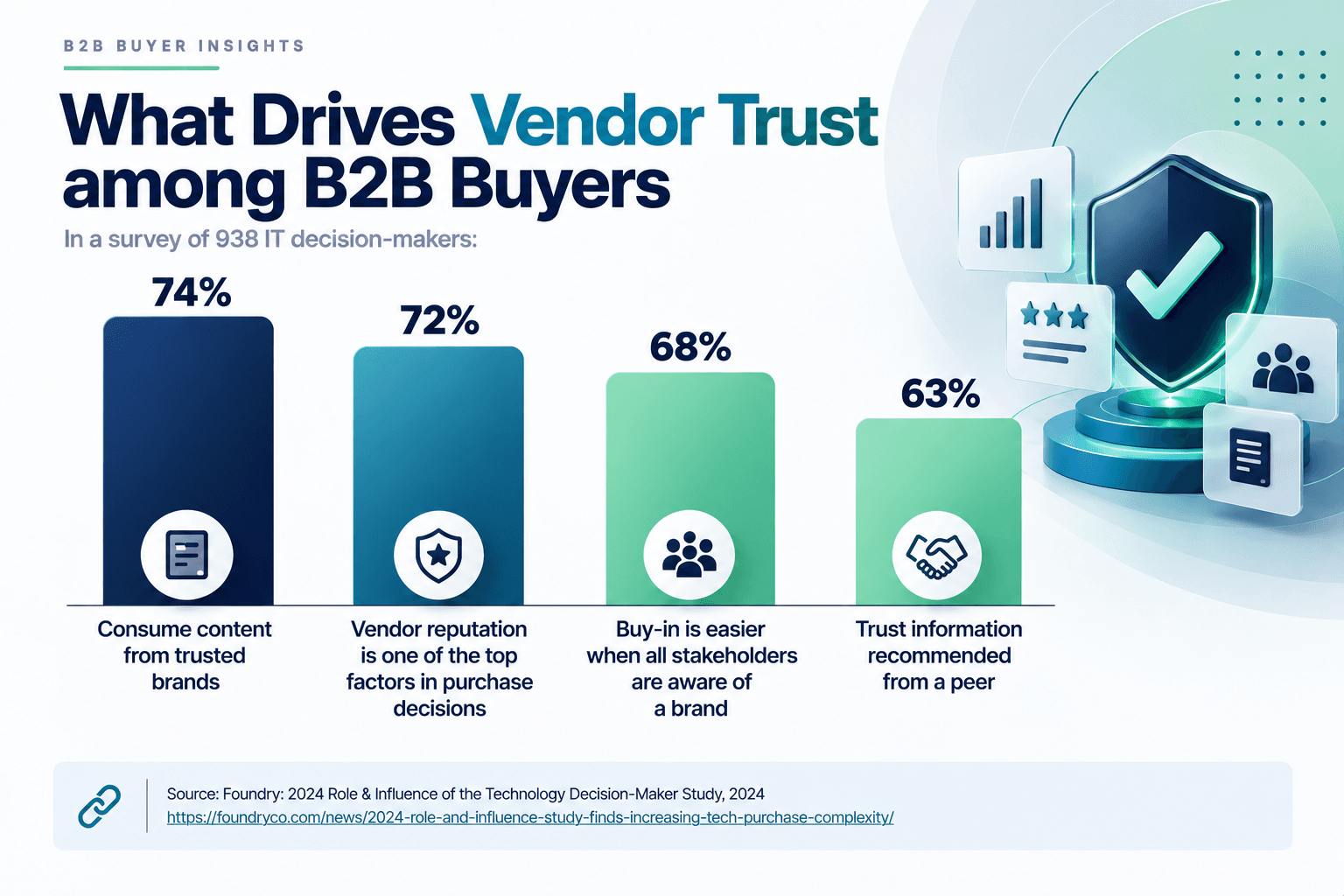
Industry newsletters and editorial publications are core research sources for technical B2B buyers (TREW Marketing & GlobalSpec, 2026). Buyers use them to follow category developments, encounter vendor perspectives in a neutral editorial context, and form initial views on who is credible in their space.
The distinction that matters for pre-funnel presence is editorial versus paid. Content appearing in publications buyers choose to read for research purposes carries different credibility than sponsored placements or promoted posts. Buyers in research mode distinguish between a vendor whose perspective appears in editorial they already trust and a vendor who bought placement in the same publication.
What editorial presence requires: content with genuine practitioner value, not product promotion, distributed consistently over 3-6 months through publications with established readerships among the target ICP. A single article in a respected publication does not build shortlist position. Consistent editorial presence across multiple issues and multiple publications builds the kind of familiarity that registers when a buyer forms an initial shortlist.
The volume requirement is often underestimated. A buyer may encounter content from a vendor in a trusted editorial publication three or four times over six months before that familiarity translates to shortlist consideration. The first encounter registers at the level of awareness. The third and fourth register at the level of credibility. Programs that run for 60-90 days and evaluate on immediate pipeline are stopping before the credibility curve completes.
Channel 2: Practitioner Communities
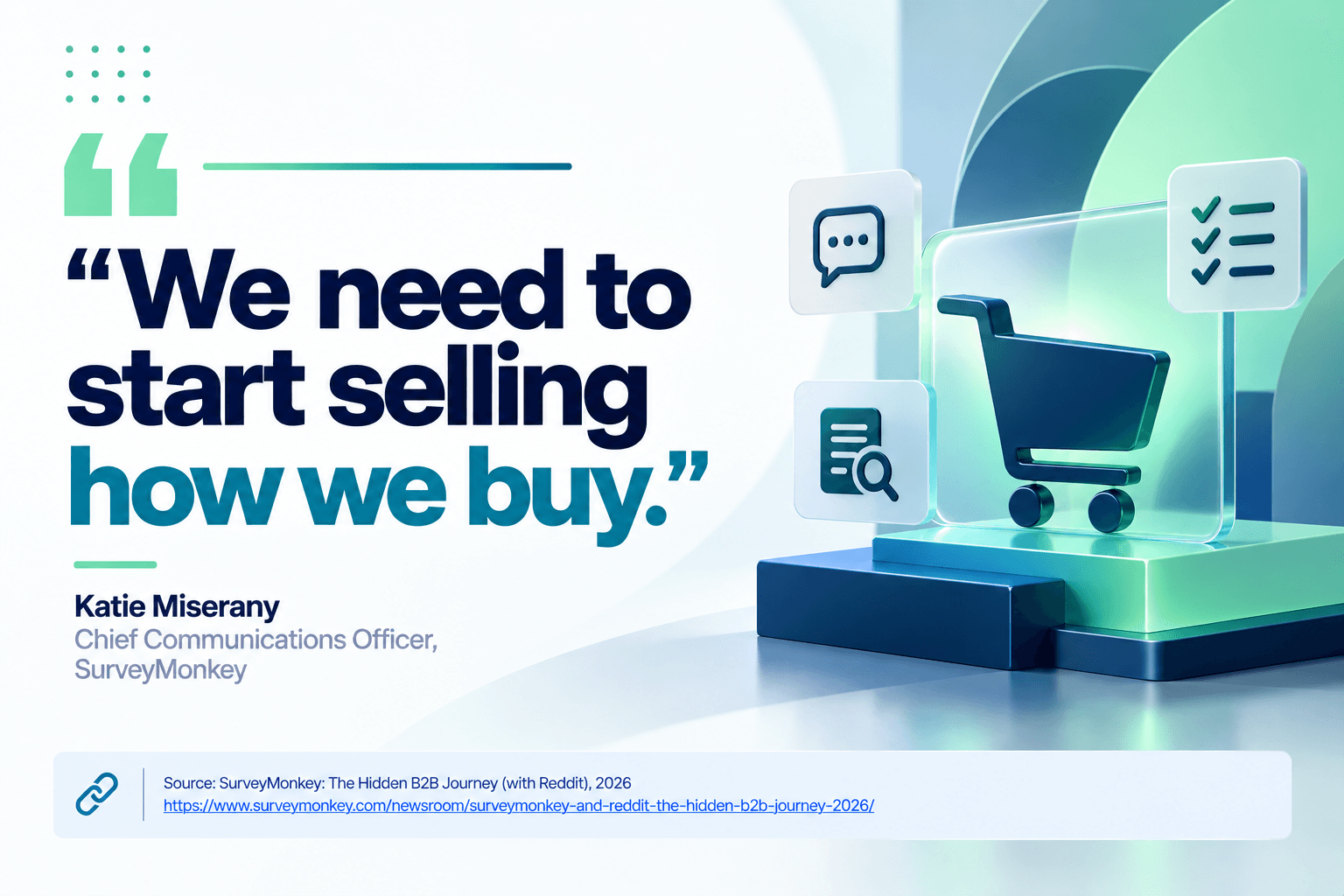
83% of B2B decision-makers research via peer communities and self-directed search before contacting sales (SurveyMonkey & Reddit, 2026). Private Slack groups, LinkedIn communities, and specialized forums are among the most trusted research channels in B2B buying precisely because they are peer-controlled. No vendor can buy their way into credibility there.
The conversations that matter happen without vendor involvement: “Who have you used for content syndication at enterprise scale?” “Has anyone run a buying committee program with this vendor?” “What was your experience with X when the campaign underdelivered?” The answers in those threads carry more weight than anything a vendor produces for its own marketing.
Building presence in practitioner communities requires sustained non-promotional contribution over months. Answering questions with genuine expertise, sharing real operational perspective, being a practitioner that other practitioners recognize as worth listening to. Vendors who enter communities primarily to promote their products are quickly recognized and ignored. Vendors who contribute real expertise over time earn organic recommendation, one of the most trusted introductions in B2B buying.
The practical implication: community presence is built by people, not platforms. A vendor’s marketing team cannot be present in a practitioner community the way a vendor’s senior practitioners can. The channel requires authentic subject matter expertise, contributed consistently, with no direct promotional intent.
Channel 3: LinkedIn Organic From Individual Voices
Company page posts on LinkedIn reach a fraction of the audience that individual practitioner voices reach. Individual employee posts generate 2.75x more impressions than company page posts (Refine Labs, 2023).
The research-phase buyer scrolling LinkedIn is looking for practitioner perspective, not brand content. They stop on posts that name a problem they recognize, offer a reframe they have not heard, or share operational insight they can apply. They scroll past promotional content, product announcements, and awards posts.
LinkedIn organic as a pre-funnel presence channel requires individual voices posting consistently at 3-4 times per week, on topics directly relevant to the buyer’s category research, for a minimum of three months before audience builds to meaningful scale. The content must sound like a person with genuine opinions formed from operational experience, not a brand with a marketing message.
The three-month minimum is structural, not arbitrary. LinkedIn’s algorithm rewards consistency. An account that posts for six weeks, stops for two, and restarts has to rebuild much of its reach. Pre-funnel presence through LinkedIn organic requires the same commitment as editorial presence: sustained, consistent, over time.
Channel 4: AI-indexed Editorial Content
AI research now represents a significant and growing share of B2B vendor research. 94% of B2B buyers used AI tools in their buying research in 2025. That’s up from 89% a year earlier, and twice as many buyers now name AI their most meaningful research source (Forrester, 2026).
AI research sessions produce no trackable signal. They do produce shortlists. A buyer querying an AI tool for demand generation vendor comparisons receives a synthesized answer naming three to five vendors. That answer shapes the initial shortlist. The demand gen programs for every vendor named or not named in that answer receive no data that the session occurred.
Editorial distribution into AI-indexed sources is a distinct channel because it requires a distinct content approach: third-party editorial environments, not vendor-owned pages. AI tools draw 84% of their citations from earned media and just 0.3% from paid content (Muck Rack, 2026). A vendor whose category expertise is documented across multiple credible editorial publications has higher citation probability than a vendor whose expertise is concentrated on their own site.
This channel is not separate from Channel 1 in its infrastructure requirements. The same editorial distribution that builds research-phase brand familiarity through industry publications also builds AI citation probability. They share the same content and distribution mechanism, with AI indexing as an additional benefit of consistent editorial presence in trusted third-party environments.
Channel 5: Peer Referral Networks
Peer recommendations rank among the most trusted inputs in B2B buying research (Forrester, 2025). A buyer asking a trusted peer “who are you using for content syndication at this scale?” and receiving a specific answer gets one of the most trusted inputs in their research.
Peer referral as a pre-funnel channel is the slowest to build and the hardest to systematize. It depends on program quality: clients who experienced outcomes worth talking about are the source of peer referrals. Clients who received adequate but unremarkable results do not typically refer.
What peer referral presence requires: program quality that generates referrable outcomes, consistent relationship maintenance with past and current clients, and content that helps practitioners explain the vendor’s approach to peers who ask. The last element is often overlooked. A practitioner who wants to recommend a vendor needs to be able to explain that vendor’s differentiation clearly enough that the recommendation is actionable. Content that equips practitioners to make accurate, credible recommendations is a direct input to peer referral volume.
This is the only pre-funnel channel where the product itself is the primary variable. No content strategy or distribution infrastructure substitutes for outcomes that clients want to discuss with peers.
The Timeline Problem and How to Measure Pre-funnel Presence
Pre-funnel presence programs require a fundamentally different measurement horizon than demand capture programs.
A paid search campaign can be evaluated in 4-6 weeks: impressions, clicks, conversions, cost per acquisition. The measurement window is short because the behavioral loop is short. The buyer searched, clicked, converted, or did not.
Pre-funnel presence builds over months and produces pipeline that arrives with no apparent source attribution. The account that appears in the pipeline after six months of editorial presence has no form fill attached to the editorial content they read. They show up as “no source” or “direct” pipeline. Without intentional segmentation, there is no way to connect the editorial touchpoints to the pipeline arrival.
Programs measured on 4-6 week form fill metrics systematically undervalue pre-funnel presence and cut programs before the pipeline they are building arrives. This is the measurement horizon problem that allows ‘The Pre-Funnel Presence Gap’ to persist. The channel that produces no in-quarter data gets defunded. The channel that produces weekly reports, even when those reports do not translate to pipeline, continues to receive investment.
The measurement approach that makes pre-funnel presence defensible: track win rate separately for accounts with pre-funnel exposure versus accounts first encountered at declared intent. Measure deal velocity for each segment. Track shortlist inclusion as a leading indicator rather than pipeline volume as a lagging one. Those metrics require segmentation and a two-to-three quarter window. For programs willing to run the analysis, the output is a defensible evidence base.
What We See Across 4,000+ Campaigns Annually
Machintel runs 4,000+ campaigns annually across B2B tech and SaaS. The programs producing the most consistent pipeline share a structural pattern: they are present in multiple pre-funnel channels simultaneously, not just one.
The operational question most programs face is not if pre-funnel presence matters. The vendor buyers prefer before contacting sales wins 80% of deals (6sense, 2025).
The operational question is how to sustain a 6-month investment in channels that produce no weekly reports, no dashboard updates, and no demand gen attribution data, until the pipeline arrives that validates the investment.
Programs that answer that question by building the segmented measurement model described above, and committing to the measurement window, consistently find that pre-funnel presence produces the highest-quality pipeline in their program. The accounts are already convinced by the time they contact sales. The evaluation is already weighted in the vendor’s favor. ‘The Pre-Funnel Presence Gap’ is not a marketing problem. It is a measurement model problem that prevents the right investment.
FAQs
Why do most pre-funnel presence programs underperform despite real investment?
Most programs activate in one channel, typically LinkedIn organic or one editorial publication, while shortlist formation happens across five simultaneous channels. A vendor present in one of the five is absent from the majority of shortlist formation moments, regardless of how well they execute in that single channel.
How long does multi-channel pre-funnel presence take to produce pipeline results?
The research window for most B2B enterprise evaluations can run six months or more. Pre-funnel presence built over 6 months reaches accounts at multiple points in their research phase. Programs evaluated at 60-90 days are measuring before the credibility curve completes.
Can a vendor build practitioner community presence through content investment alone?
No. Community presence requires authentic, non-promotional contribution by senior practitioners over months. Marketing teams cannot manufacture it through content spend. The channel rewards genuine expertise shared consistently, not promotional content volume.
Sources
- TREW Marketing & GlobalSpec: State of Marketing to Engineers, 2026
- SurveyMonkey: The Hidden B2B Journey (with Reddit), 2026
- Refine Labs: Personal LinkedIn Profiles Outperform Company Pages with 5x More Engagement, 2023
- Forrester: B2B Buyers Make Zero-Click Buying Number One, 2026
- Forrester: B2B Buyers Rate Their Most Trusted Information Sources, 2025
- 6sense: 2025 Buyer Experience Report (via Business Wire), 2025
- Muck Rack: What Is AI Reading? (Generative Pulse), 2026