High CRM match rates in syndication programs often indicate that prior customers, known contacts, and previously delivered names are re-entering the SDR queue. The ‘Recycled Contact Problem’ is a structural outcome of CPL-based contracts: vendors have little financial incentive to exclude contacts from their existing database. The fix requires suppression applied at the publisher level before delivery, not flagged after the fact.
The Recycled Contact Problem in B2B Content Syndication
Content
Nov 5, 2026

The campaign hits its numbers. Contact volume is on target, CPL lands within budget, and the quarterly report shows successful syndication activity. Then the SDR team works the contacts and finds that response and conversion to meaningful conversation stall at a fraction of what the program was forecast to deliver. Marketing operations runs a CRM match and finds that 30% of the delivered contacts were already in the system from campaigns run 6-12 months earlier.
The program hit its numbers because the contacts were recycled. The numbers were real. The pipeline opportunity was not.
The ‘Recycled Contact Problem’ is structural. It follows from the CPL model that governs many content syndication contracts, and it produces predictable outcomes: contacts that fulfill the delivery requirement while failing the pipeline test.
How the CPL Model Creates the Recycled Contact Problem
Content syndication vendors are typically contracted on cost per lead: deliver X contacts at Y cost per lead within a defined timeline. The vendor is paid on delivery of contact records that meet the stated targeting criteria.
The CPL model is easy to fulfill with recycled contacts. A contact who engaged with content at some point in the past meets the technical delivery requirement. Their engagement record is real. The contact details are real. The fact that the engagement was for a different sponsor, 6-12 months ago, with no evidence of current active research, does not disqualify the contact from the delivery file.
The vendor delivering contacts under CPL pressure may take the path of least resistance. Recycled contacts are often available, can cost less to source than fresh contacts, and are technically compliant with the contract terms. The model rewards volume and cost compliance. It does not reward contact freshness or pipeline contribution.
Contact recycling is not always intentional. It is the predictable output of a measurement model that does not account for the variable that actually matters: is this contact actively researching the relevant category right now?
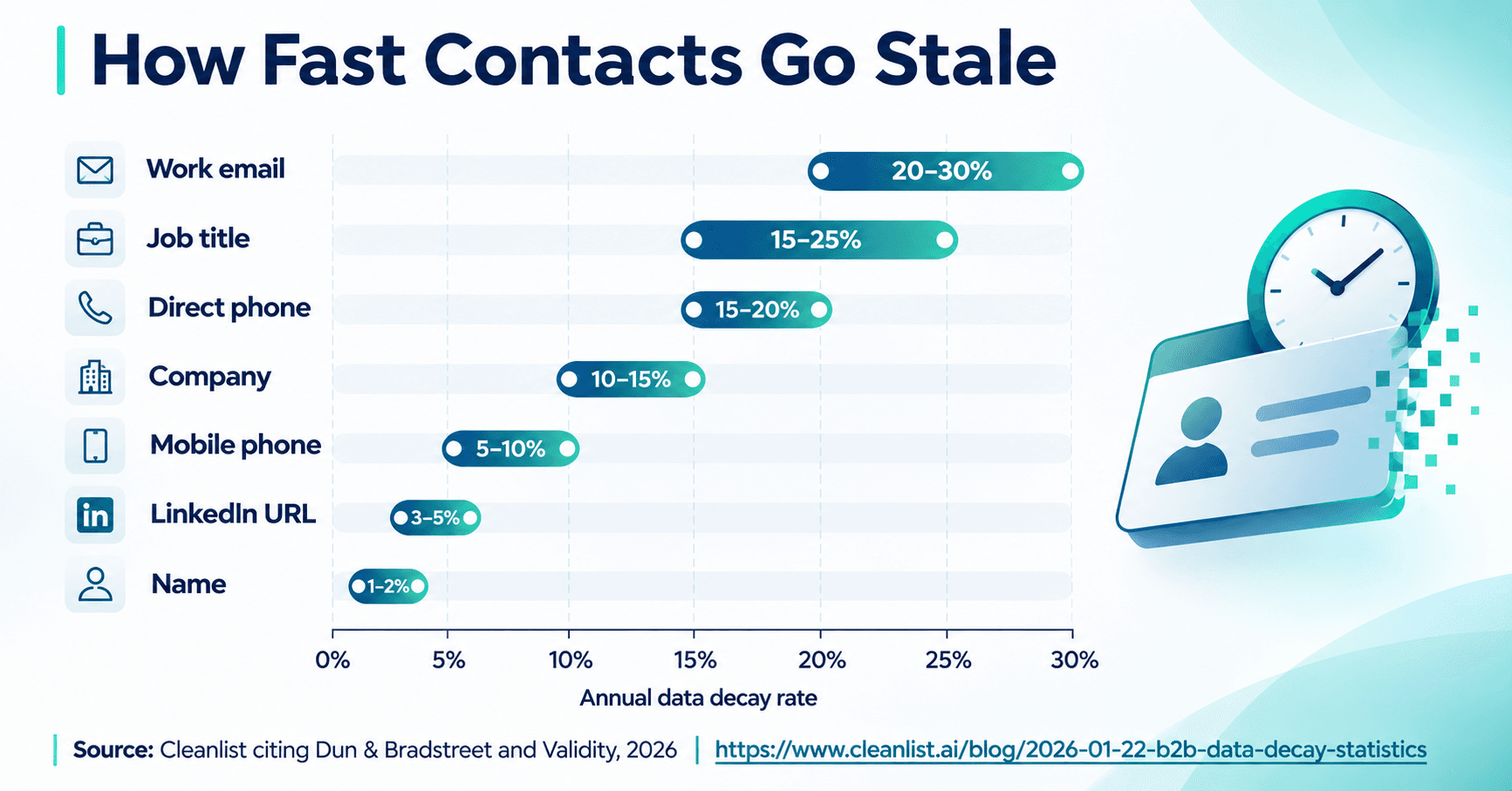
What Recycled Contacts Look like in CRM
The signals that reveal recycled contact pools are visible in CRM data and campaign performance metrics:
High CRM match rate: When a newly delivered contact file is matched against the CRM, a high match rate (for example, above 20-25%) suggests contact recycling. Contacts that were delivered and already exist in the system either represent genuine multi-touch engagement or are contacts from prior syndication campaigns being re-delivered. In many cases, for programs that have been running syndication for more than two quarters, the high match rate reflects recycling.
Low engagement recency on delivered contacts: Some vendors provide engagement date data with contact records. When the engagement dates cluster around a period significantly earlier than the campaign delivery date, the contacts were not actively researching during the current campaign window. Engagement from 6-12 months prior to delivery is a recycling signal.
Below-average SDR response rates: Recycled contacts have already been through a prior follow-up sequence, or their engagement was for a different sponsor and they have no relationship to the current brand. SDR response rates from recycled contacts tend to run lower than from fresh contacts from current programs. Recycled and overlapping leads are a known risk in syndication batches (Toolradar, 2026). The difference in response rate is a performance indicator of contact freshness.
No recall of the content: SDRs calling contacts from a syndication program frequently encounter prospects who have no memory of downloading the content. This is consistent with two scenarios: the contact was recycled from a prior engagement, or the contact’s engagement was low-intent (a forced download in exchange for access to something else). Both produce the same result: no active research context.
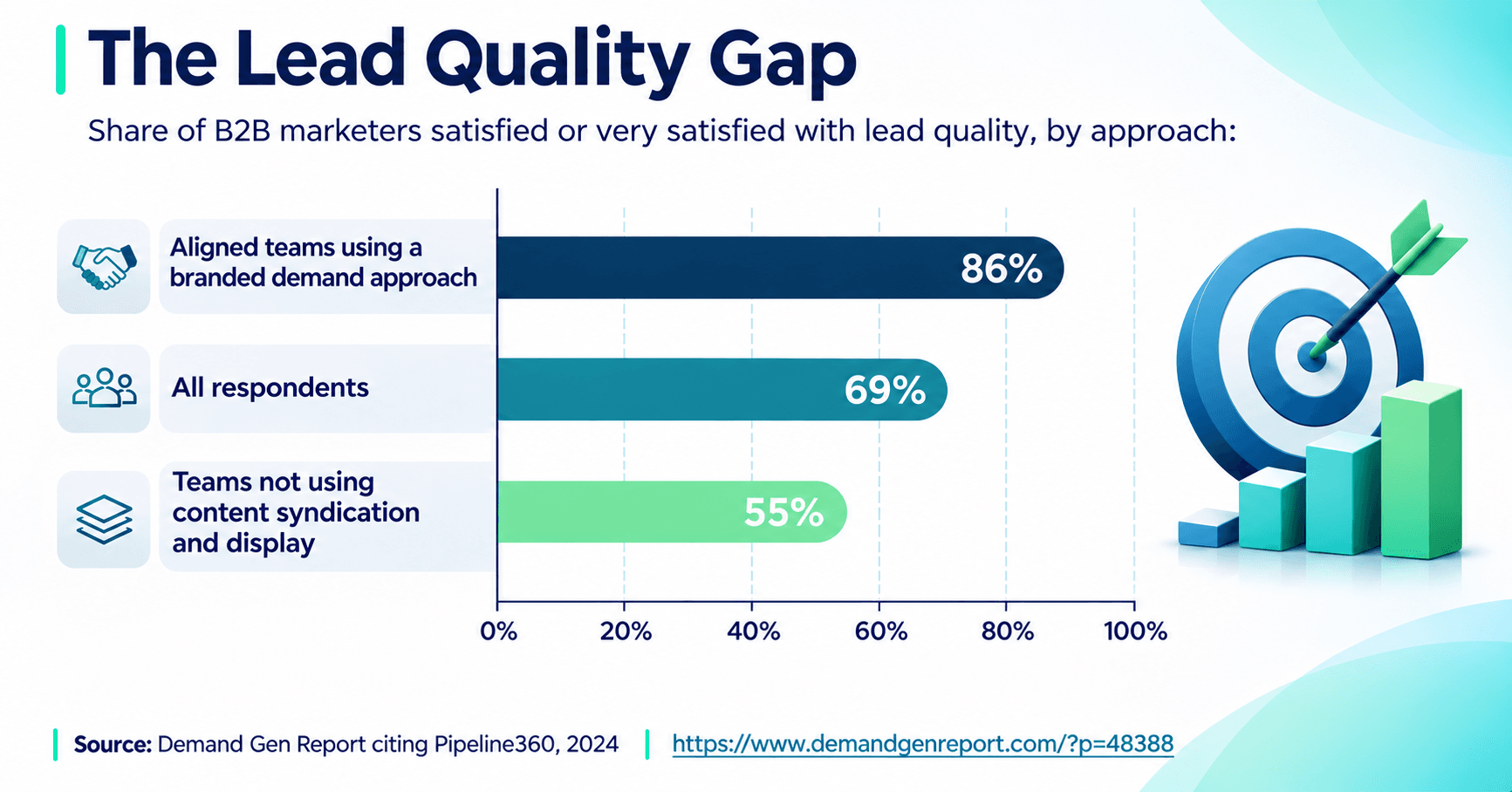
Not knowing whether the people in a campaign are really researching right now makes it hard to trust the results. Machintel helps B2B demand generation teams build campaigns around current reader interest, with the engagement behind each response visible to your team. Follow-up then starts from what the person actually read.
How Suppression Prevents Recycled Delivery
Most programs apply suppression as a post-delivery quality check: the receiving team runs the CRM match, flags the recycled contacts, and requests replacements. This catches the problem after it has already entered the SDR workflow. The primary defense is suppression applied at the publisher level before delivery, not after contact receipt. When the vendor applies the sponsor’s suppression list before any contact is selected, recycled contacts are excluded from the candidate pool entirely, and the delivery file arrives already filtered.
Suppression lists for syndication programs need three segments:
- Current customers: Accounts already in a customer relationship have little new-pipeline value and their inclusion signals poor data hygiene.
- Prior contacts from syndication campaigns within the suppression window: Contacts delivered in the last 6-12 months should not be re-delivered to the same sponsor.
- Global opt-outs: Contacts who have opted out of communications should not be contacted again.
The suppression list needs to be current at the time of campaign delivery, not pulled once at the start of the contract and applied statically. Contacts move into customer status, opt-out, or get added to the CRM between contract signing and delivery. A suppression list that is not refreshed before each batch delivery will miss these movements.
Pre-delivery suppression is a contractual requirement, not a nice-to-have. It needs to be specified in the statement of work, not assumed. Vendors who apply suppression only on request, or only after delivery as a quality flag, are not operating with a suppression architecture that prevents the ‘Recycled Contact Problem’ from reaching the SDR team.
Behavioral Cluster Intent adds a further quality layer: targeting accounts where buying committee members are showing active research signals at the time of delivery rather than contacts who showed research signals at some prior point. Intent-based targeting applied at delivery reduces the recycling problem by prioritizing contacts with current research activity.
What Contact Freshness Actually Means
Contact freshness is not just about recency. A contact whose last engagement was for a different sponsor many months ago has an engagement record, but not a fresh one for the current program. A contact who engaged with content two months ago for the current sponsor as part of a prior campaign is a warm contact being recycled, not a fresh prospect.
Freshness means: the contact has not been contacted by the current brand before, their engagement with the current content was genuine and current, and their engagement record reflects active research at the time of delivery.
Vendors who can provide engagement timestamp data, publisher source data (where the contact encountered the content), and sponsor history (how many sponsors they have been delivered to in the same period) offer the transparency needed to assess contact freshness. Vendors who cannot or will not provide this data are not able to verify freshness independently, which is itself a signal.
The Engagement Record Quality Test
Recycling is one freshness problem. The other is the thin engagement record that cannot show whether a contact is active. The quality of the engagement record determines the value of the contact.
A high-quality engagement record includes: the specific content the contact accessed, the publisher where they encountered the content offer, the date and time of engagement, and the job function and seniority of the contact. In programs with richer data, it also includes time spent with the content, related content accessed, and session depth data from the publisher.
A low-quality engagement record includes a name, a job title, a company, and an email. The content title may be listed, but engagement depth data is absent. This record cannot tell the follow-up sequence anything meaningful about research stage.
Thin records often leave the follow-up sequence treating all contacts identically, because the engagement data is too weak to calibrate. Rich records enable research-stage-calibrated follow-up, which tends to produce higher response rates and better pipeline conversion.
FAQs
What is the ‘Recycled Contact Problem’ in B2B content syndication?
The ‘Recycled Contact Problem’ is when a syndication program delivers contacts who are already in the sponsor’s CRM or were delivered to the same sponsor in an earlier campaign. CPL contracts reward delivery volume, not contact freshness, so the contact count is met while the pipeline opportunity is not.
How can a team tell whether a syndication vendor is delivering recycled contacts?
Match each delivery file against the CRM. A high match rate (for example, above 20-25%) on a program that has run for more than two quarters, engagement dates well before the campaign window, low SDR response, and prospects who do not recall the content are the main warning signs.
What suppression should be in place before a syndication campaign is delivered?
Three segments: current customers, contacts delivered within the last 6-12 months, and global opt-outs. The vendor should apply the list before any contact is selected for delivery and refresh it before each batch, with the requirement written into the statement of work.