Many B2B marketers report that syndication programs have not met pipeline expectations. The ‘Syndication Design Gap’ is not a channel failure. It is a design failure: programs built on CPL metrics optimize for contact volume, not account-level pipeline signal. ICP-matched content syndication produces 2 to 4 times the downstream conversion of broad distribution programs.
B2B Content Syndication: What It Is, Why Many Programs Underperform, and What the High-performing Ones Do Differently
Content
Nov 3, 2026

61% of B2B marketers who use content syndication reached their goals, versus 45% of those who do not. (Pipeline360 and Demand Metric, 2024) The mechanism is not broken. The program design is.
This is the ‘Syndication Design Gap’: the difference between a content syndication program built for contact volume and one built for pipeline contribution. The inputs look similar. The outputs are fundamentally different.
What Content Syndication Actually Is
Content syndication is the distribution of content through third-party publisher networks, aggregator platforms, and curated B2B media properties. A reader encounters the content while engaging with a publication they already trust, not while searching for a vendor. The reader’s engagement is captured, the sponsoring brand receives the lead, and the contact enters the demand generation workflow.
The structural advantage of syndication over owned-channel distribution is reach into audiences with no prior relationship to the brand. The email list reaches existing contacts. The company LinkedIn page reaches existing followers. The blog reaches whoever finds it through search. Syndication reaches buyers actively consuming content in the relevant category at publications they already read, many of whom have never encountered the brand.
74% of buyers use peer reviews to inform purchase decisions, while only 13% rely on analyst reports (TrustRadius, 2026). The sources that move buyers are not the brand’s own properties. They are the third-party sources buyers already trust when researching a topic. Syndication is the mechanism that gets content into the third-party context where those decisions form.
The structural distinction matters for program design. Owned channels reinforce relationships with people who already know the brand. Syndication builds awareness and engagement with the segment of the ICP that has never encountered it. These are different objectives, and the program design that serves each objective is different. Applying owned-channel content and owned-channel follow-up logic to a syndication program is one of the primary sources of underperformance.
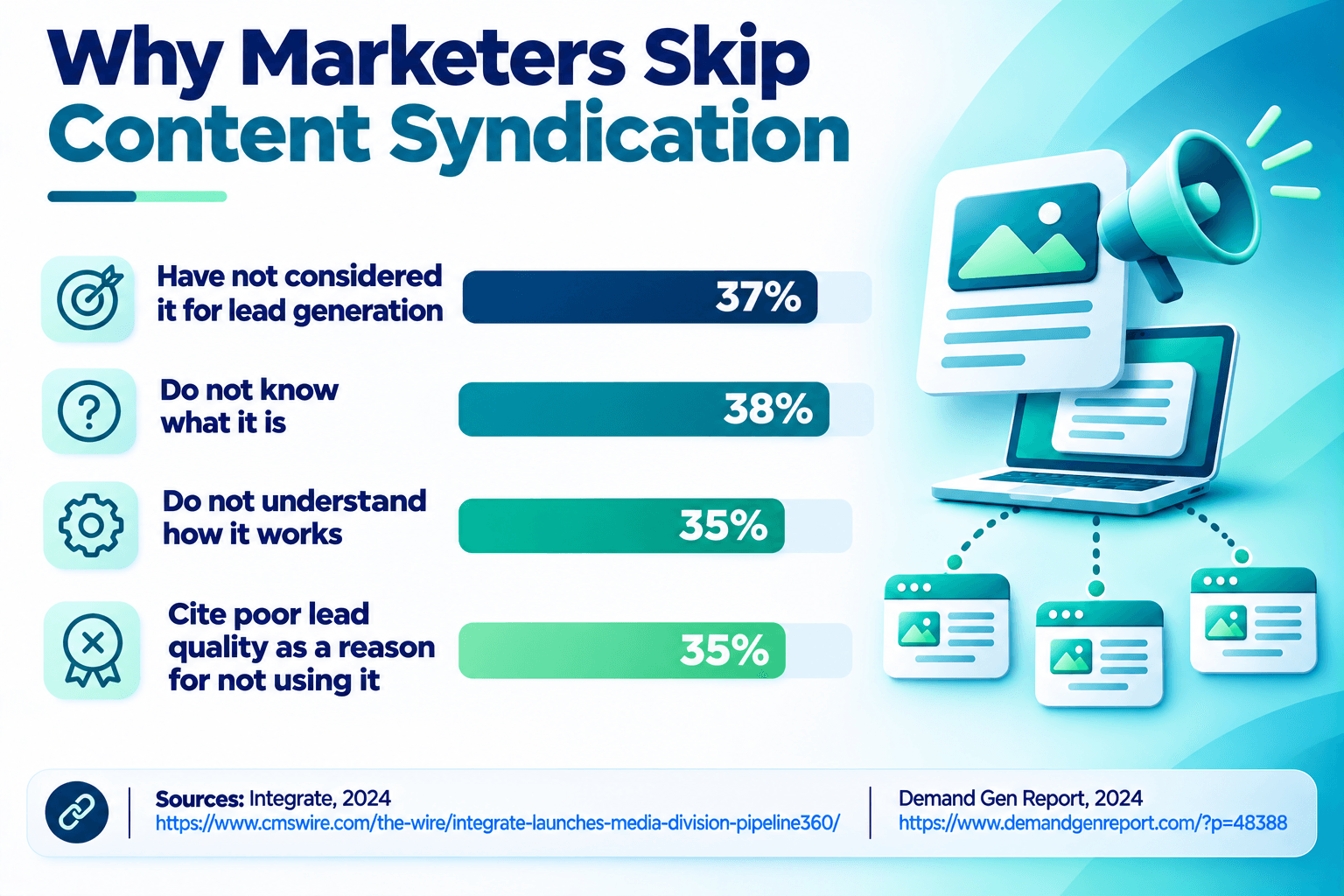
Why So Many Programs Disappoint
The gap between use and pipeline results is not a coincidence. It reflects a predictable pattern in how syndication programs are designed.
Targeting that is too broad: Many entry-level syndication programs target by broad topic category: ‘marketing technology’, ‘cybersecurity’, ‘cloud infrastructure’. Broad topic targeting reaches a large audience with poor ICP match. The contacts generated include job functions that have no purchasing role, company sizes outside the ICP, and industries that do not fit the product. Raw contact volume looks strong. Pipeline-qualified contact volume is a fraction of the headline number.
Behavioral Cluster Intent data identifies which accounts have buying committee members actively researching specific sub-topics within a category, enabling targeting precision that broad demographic filters cannot achieve. The same syndication budget, applied with layered firmographic, technographic, and intent-based targeting, produces fundamentally different contact quality.
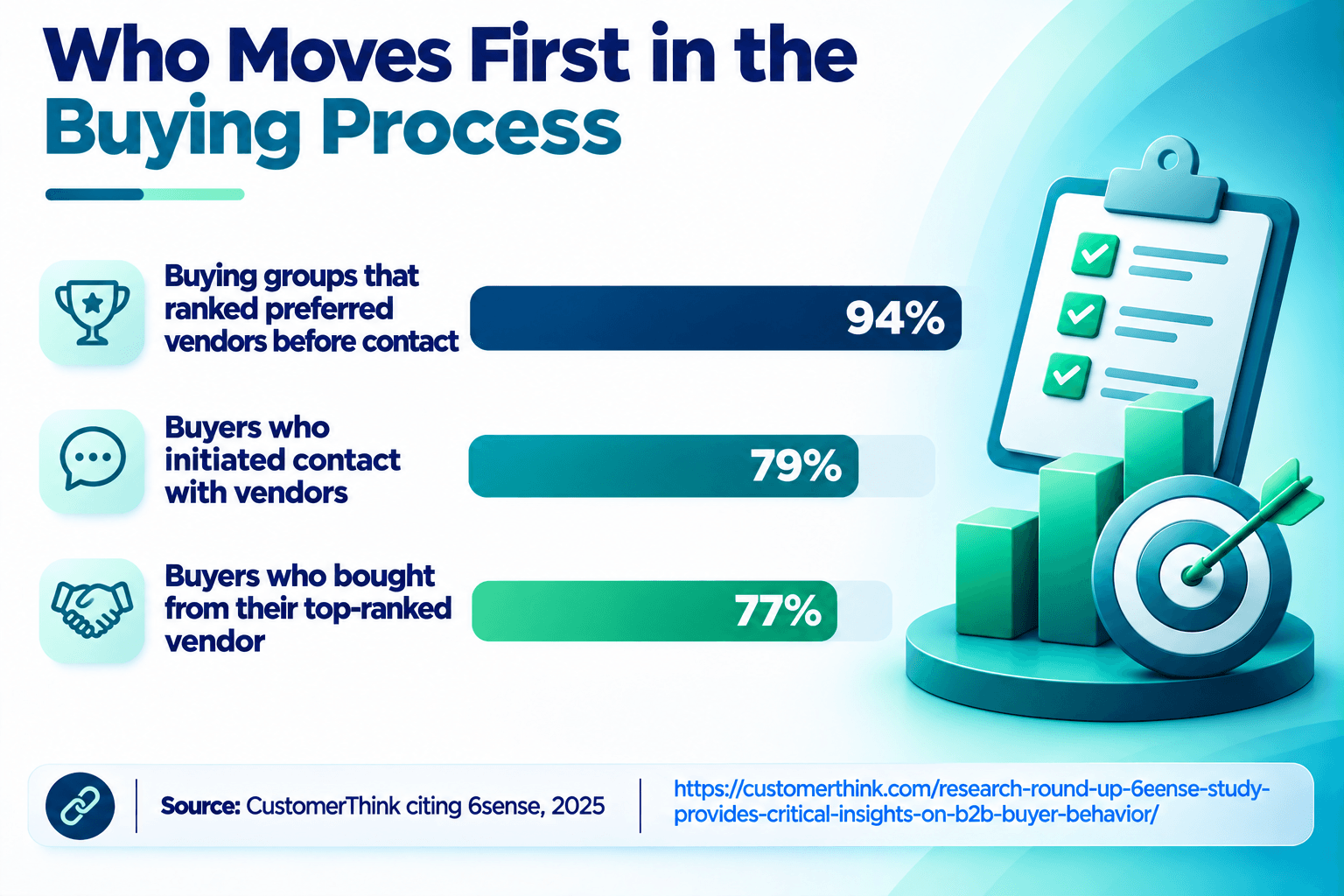
Follow-up calibrated to the wrong stage: Syndication contacts are typically research-stage buyers. They encountered a piece of content that matched a problem they were exploring. They are not late-stage prospects ready for a sales conversation. The programs that treat syndication contacts as inbound leads ready for SDR outreach immediately after form fill tend to see low response rates, high opt-out rates, and poor stage conversion.
The correct follow-up sequence for syndication contacts is calibrated to research stage. Additional content relevant to the problem they engaged with, delivered over the first 45 days, before any sales outreach. Accounts showing buying committee concentration (multiple contacts from the same account engaging with related content) move through the sequence with priority.
Missing suppression logic: Without suppression, syndication programs contact existing customers, accounts already in active sales engagement, and contacts who have previously opted out. Each of these categories represents friction with other parts of the demand generation and sales workflow. Suppression lists need to be current, shared across sales and marketing, and applied at the campaign delivery stage, not after contacts are generated.
Single-piece programs: A single gated asset generates a spike of contact volume and then stops producing. Syndication programs built on a rolling content calendar, where multiple assets address different stages of the research cycle, generate sustained contact flow and support the multi-touch sequence that actually moves research-stage buyers toward pipeline.
Paying for syndication and ending up with a long list of contacts who are not ready to talk makes it hard to say whether the channel is working. Machintel’s demand generation services help B2B marketers plan the whole program, including what each reader sees after the first piece of content. Sales then hears from buyers who have moved along in their research, not just ones who clicked once.
What Targeting Precision Changes
The difference between broad topic targeting and layered precision targeting in syndication is not marginal. It is the primary variable determining contact quality and downstream pipeline contribution.
Broad targeting: Topic category + general job function (e.g., ‘marketing’ or ‘IT’).
Layered precision targeting: Specific job functions with buying role (e.g., Demand Generation Manager, VP Marketing, CMO), company size range matching the ICP (e.g., 200-2,000 employees), industry verticals with product fit, technology stack indicators showing the tools and platforms the prospect uses, and intent signals showing active research on the relevant category.
ICP-matched content syndication produces 2 to 4 times the downstream conversion of broad distribution programs (Abmatic, 2026). The difference is targeting precision, not content quality. The same piece distributed broadly versus to a tightly defined ICP audience produces dramatically different pipeline outcomes. The volume of contacts generated by broad targeting is higher. The pipeline-attributed portion of that volume is lower. The cost per pipeline-attributed contact from broad targeting is typically higher than from precision targeting.
The implication: Optimizing syndication programs for contact volume is optimizing for the wrong metric. The metric that matters is ICP-matched contacts and the downstream pipeline attribution those contacts generate.
The Account-level Signal That Predicts Pipeline
Individual contact engagement from a syndication campaign is a weak pipeline signal. A single person downloaded a piece of content. They may be at an ICP account or not. They may have buying committee influence or not. They may be in an active evaluation or not.
Account-level engagement is a strong pipeline signal. Multiple buying committee members at the same target account engaging with related content within a defined window indicates active group consideration. Accounts where three or more buying committee members have engaged with related content convert to pipeline at a higher rate than accounts with single-contact engagement.
This signal requires account-level aggregation of contact data. When contacts from a syndication campaign are matched to account records and the per-account engagement concentration is tracked, the accounts showing buying committee clustering become visible. These accounts warrant timely follow-up and sales notification, because the account-level signal is predictive of pipeline in a way that individual contact engagement is not.
The Follow-up Sequence That Matches Research Stage
Most syndication contacts are not ready for a sales call. They are buyers who encountered a piece of content that matched a problem they are researching. The follow-up that works is content-first, not sales-first.
A calibrated follow-up sequence has three phases:
The first phase, days 1-14 post-engagement, delivers additional content related to the original engagement. If the contact downloaded a piece about content distribution gap, the first follow-up is a related piece about content performance measurement or distribution-first strategy. The goal is continued content engagement, not conversion.
The second phase, days 15-45, introduces Machintel’s perspective on the problem. What specific approach does Machintel take, and why does it produce different results than standard programs? This content is more specific to the solution but still focused on the problem the contact has, not on a product pitch.
The third phase, days 46-90, introduces a direct outreach offer only for accounts showing buying committee concentration from phase one and two engagement. Single-contact accounts continue in the nurture flow. Multi-contact accounts get a specific, context-informed outreach referencing the content they have already engaged with.
This sequence requires contact data tied to account records, engagement tracking across all three phases, and suppression logic that identifies accounts already in sales engagement. Programs built without this infrastructure collapse the three phases into a single immediate sales outreach, and the results reflect the mismatch.
FAQs
What is the most common reason B2B content syndication programs underperform?
Programs built on CPL metrics and broad topic targeting optimize for contact volume, not account-level pipeline signal. The contacts they generate often have poor ICP match, and follow-up treats research-stage buyers as ready for sales outreach.
How should a B2B marketing team measure syndication program health before pipeline appears?
Track ICP account coverage, buying committee engagement depth, and account-level pipeline attribution. These three metrics show whether the program is building toward pipeline without requiring closed revenue to validate early-stage activity.
What is the single most effective change a demand gen team can make to improve pipeline quality?
Shift from contact-level metrics to account-level metrics. A program that counts individual opens and clicks will optimize for volume. A program that measures account engagement across multiple contacts will optimize for buying committee coverage, which is what produces pipeline.
Recent Posts

Distribution-first Content Strategy: Why the Sequence You Build Content in Determines the Pipeline It Generates

B2B Content Performance Measurement: Why Engagement Metrics Cannot Answer the Pipeline Question

AI-assisted B2B Content Production: The Model That Maintains Authority Without Sacrificing Volume