B2B shortlist formation happens across three discrete moments before formal evaluation begins: the champion’s mental pre-decision, the peer recommendation, and the buying committee’s research consolidation. 97% of the time, buyers have prior experience with at least one shortlist vendor before the purchase trigger fires. Vendors absent from the channels where these three moments occur enter evaluations already excluded from most shortlists.
Where the B2B Shortlist Is Actually Built: Three Moments Before Formal Evaluation
Demand
Sep 29, 2026

The Champion's Pre-decision
In many B2B purchases, one person initiates the process. Before they surface the problem to their manager or team, they have already formed a mental shortlist: the vendors they associate with credible thinking in the category, the names they can recall without searching, the perspectives they have read and found useful.
This pre-decision forms from accumulated exposure over the preceding months. The champion has no active buying intent during this period. They are reading content in professional development channels, subscribing to newsletters, following practitioners on LinkedIn, occasionally using AI tools to research category trends. The vendors who appear consistently and credibly in those contexts become the vendors on the pre-decision mental list.
97% of the time, buyers have prior experience with at least one shortlist vendor before the purchase trigger fires (6sense, 2025). The champion’s pre-decision is where much of that prior familiarity is built.
The mechanism is simple: the champion reads a practitioner perspective in an industry editorial three or four times over six months. Each encounter reinforces a mental association between the vendor and credible category thinking. When the purchase trigger fires, that vendor is on the shortlist. Vendors who never appeared in the publications the champion reads are not on it, regardless of product quality.
The Pre-Funnel Presence Framework is Machintel’s framework for building consistent vendor presence in the channels champions use during the research phase. See how it works.
Moment 2: The Peer Recommendation
The second shortlist formation moment is the peer recommendation. When a practitioner asks a colleague: “Which vendors do you use for demand gen? We are evaluating options.” The peer’s answer carries more weight than most vendor-produced content. It is experience-based, specific, from a trusted source.
The vendors named in those conversations are the ones that get shortlisted. Vendors not named are not on the list. The frequency with which a vendor gets mentioned across peer conversations in a category is a function of two things: program quality that produces outcomes worth talking about, and market presence broad enough that practitioners in the relevant communities have encountered and remember the brand.
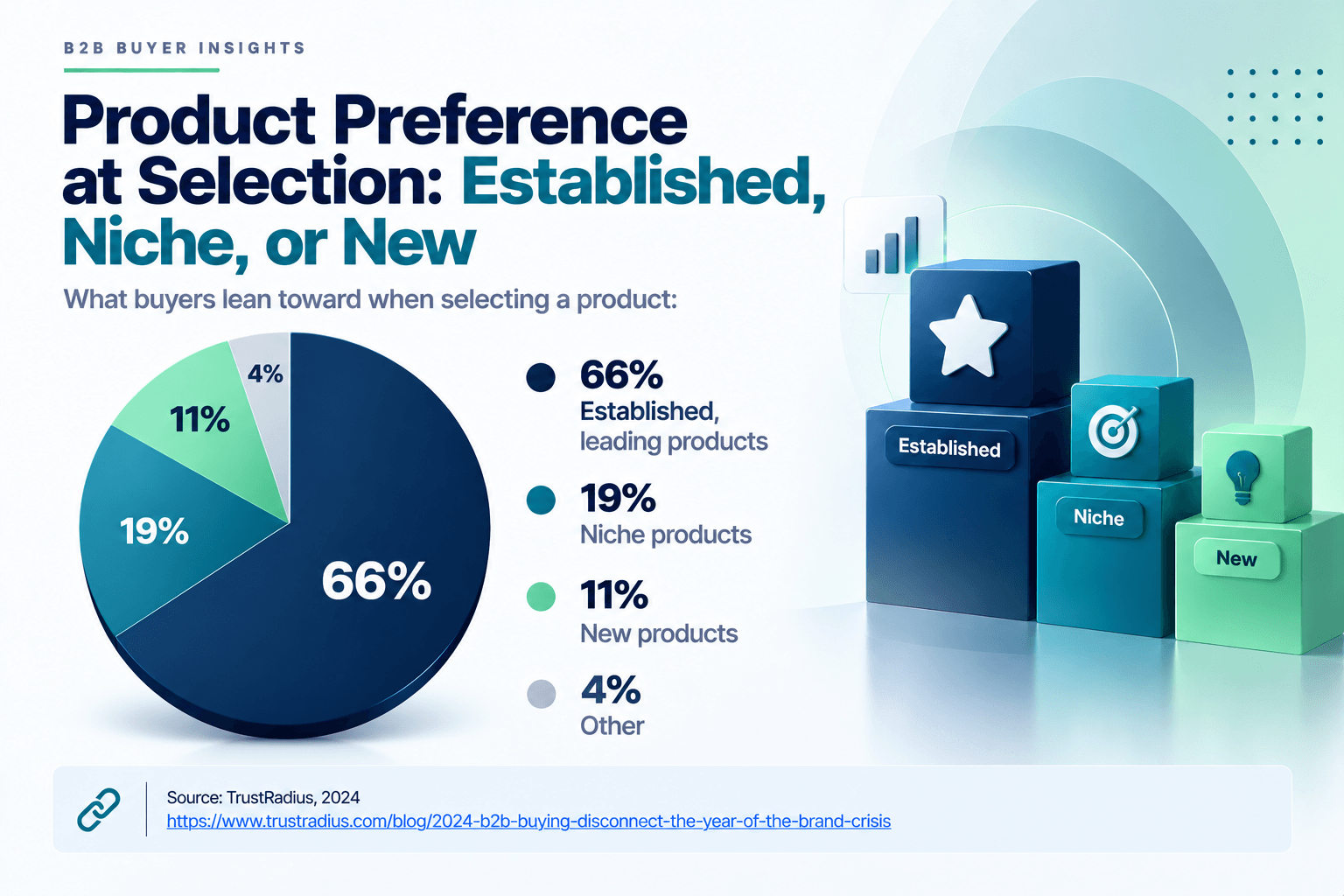
TrustRadius research shows 56% of buyers had conversations with a product user before purchasing. The Slack group, the LinkedIn direct message, the conference conversation, the forum thread: all are peer recommendation moments. All influence shortlist position.
The peer recommendation channel has one characteristic that distinguishes it from every other pre-funnel channel: it cannot be influenced directly by content investment. Vendors get recommended because their programs produced outcomes clients remember and discuss. The content investment that builds editorial presence also builds the brand recognition that makes peer mentions more likely, but the recommendation itself is earned through program performance.
For context on why research-phase channel presence drives shortlist formation, see Fix the Dark Funnel Gap Before It Quietly Costs You the Next Deal.
Moment 3: Buying Committee Research Consolidation
The third shortlist formation moment happens when the buying committee first convenes to discuss vendor options. Each member arrives with their individual research. The working shortlist that emerges is the aggregate of what the committee members brought in.
Vendors consistently present across multiple committee members’ prior research have higher shortlist inclusion probability. When four members of a buying committee independently encounter a vendor’s editorial content over the preceding months, the committee arrives with a vendor already partially validated by the group’s accumulated exposure. The vendor comes up across the table from multiple directions. It is more likely to be on the working list before any formal evaluation criteria are applied.
Vendors unknown to the majority of the committee are less likely to be named. If named by one member, they carry less inherent credibility: a single member’s awareness is a weaker signal than multi-member independent familiarity.
B2B buying committees average 13 stakeholders (Forrester, 2024). Reaching one member through one editorial publication is useful. Reaching four members through four different publications in the same category is a qualitatively different outcome. The latter produces the multi-member prior awareness that drives shortlist inclusion at the consolidation moment.
The Win Rate Consequence of Shortlist Timing
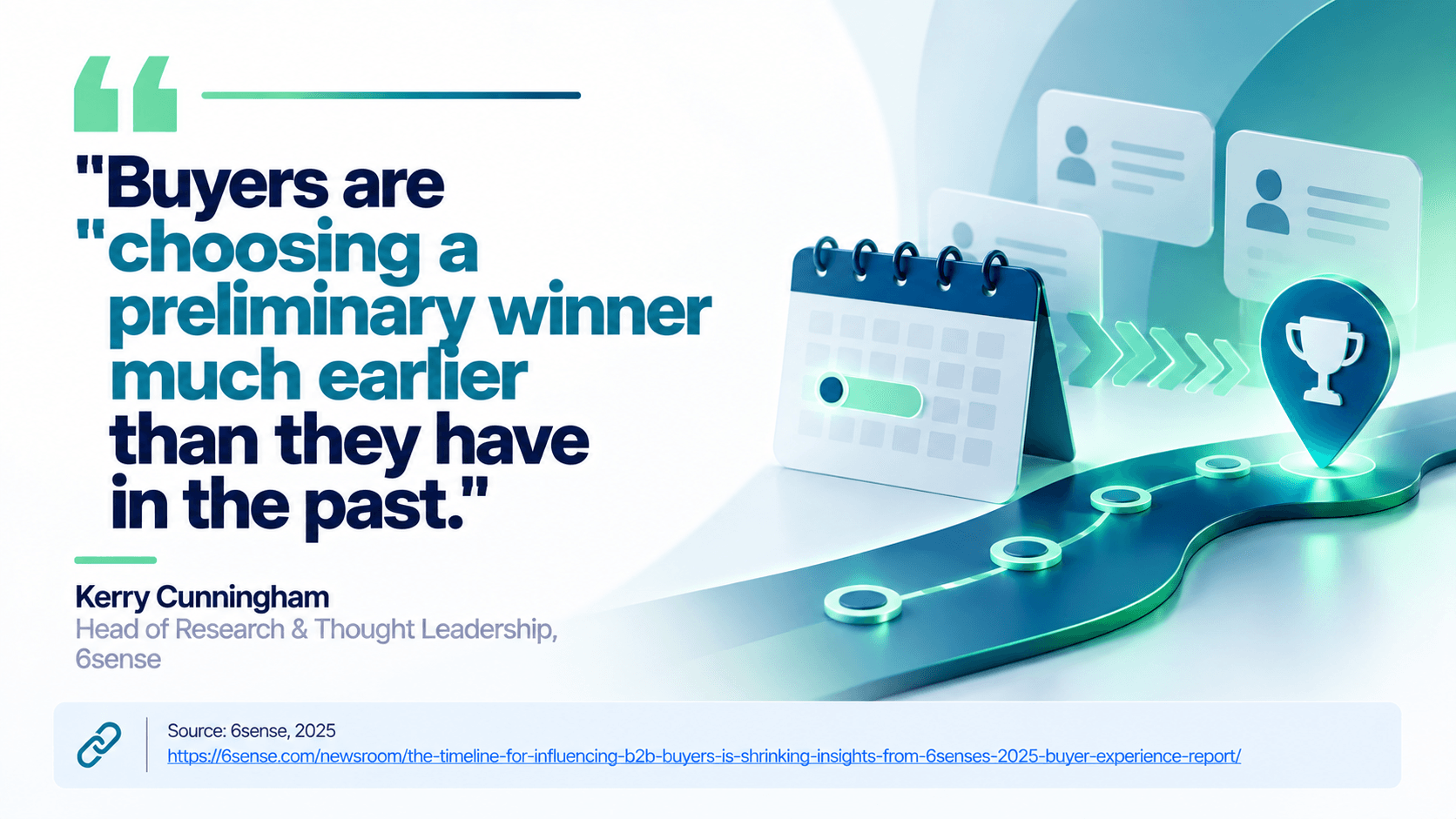
Being on the initial shortlist versus being added after formal evaluation starts affects win rates.
Initial shortlist vendors enter evaluation with the buyer already holding a mental model of the vendor: what they offer, why they might fit, what questions to explore. The evaluation is a confirmation and differentiation exercise. The buyer is looking to validate an existing positive disposition.
Vendors added after formal evaluation starts enter cold. The buyer has limited time, is already in decision mode, and is asking the late-entry vendor to accomplish in a few weeks what initial shortlist vendors had months to build. Cognitive shortcuts favor vendors the buyer already knows. 95% of winning vendors are already on the buyer’s day-one shortlist (6sense via Forbes Communications Council, 2026).
The investment case for pre-funnel presence is ultimately a win rate argument. Programs that reach buyers before purchase triggers fire do not just expand reach. They change the composition of the initial shortlist. Changing the initial shortlist composition changes win rates across the entire pipeline.
Across 4,000+ campaigns annually at Machintel, clients who have run consistent pre-funnel editorial distribution for two or more quarters report higher win rates on accounts with documented pre-funnel touchpoints than on accounts first encountered at declared intent. The velocity differential and close rate data are measurable from existing CRM records.
What Each Moment Requires From Vendor Presence
Each of the three shortlist formation moments has a different presence requirement:
The champion’s pre-decision requires editorial presence in the publications the champion reads during professional development, and LinkedIn practitioner voice the champion follows. Buying groups take months to rank their shortlists before speaking with sellers (6sense, 2025). The timeline requirement is months of consistent presence before the purchase trigger fires. A vendor whose content appears three or four times in a trusted newsletter over six months builds the kind of accumulated familiarity that registers as mental shortlist position.
The peer recommendation moment requires program quality that produces outcomes clients remember and discuss, and market presence broad enough that the vendor’s name is likely to surface when peers ask. Content investment alone cannot produce peer recommendations. Program results can. Editorial presence that raises brand recognition increases the likelihood that a positive client experience translates to a verbal mention in the right community at the right time.
The buying committee research consolidation requires breadth of presence across the category. A single publication reaching one committee member is useful. Multiple publications reaching multiple members simultaneously is the mechanism that produces multi-member independent familiarity before the committee convenes. This breadth requires editorial distribution infrastructure, not a single placement.
What Machintel's Editorial Infrastructure Provides
Machintel operates 33 owned editorial publications reaching B2B tech and SaaS buyers. Those publications distribute editorial content to subscribers who opted in for professional development and category research. A client’s perspective placed across multiple publications in the relevant category reaches multiple buying committee members through the publications they individually read.
When a buying committee convenes to consolidate vendor research, the clients with consistent Machintel editorial distribution are more likely to appear across the table from multiple directions: four members independently encountered the same vendor’s editorial perspective in four different publications they chose to read.
That breadth of independent prior familiarity is what produces multi-member shortlist validation at the consolidation moment. It cannot be replicated through a single channel or a single publication placement. It requires the distribution infrastructure to reach multiple members through multiple publications simultaneously.
‘The Shortlist Formation Gap’ closes for clients who build consistent editorial presence across the months before their buyers’ purchase triggers fire. The initial shortlist is set by day one (6sense via Forbes Communications Council, 2026). Vendors present in it have a structurally higher probability of being on the list buyers bring into formal evaluation. Vendors absent from it are competing to be added after the list is substantially closed.
The deal your sales team is working now was shaped by what your buyers read six months ago.
FAQs
Why do vendors not on the initial shortlist still win deals sometimes?
Late-entry vendors do win deals, particularly when the initial shortlist vendors underperform in evaluation. Wins also come when a champion actively advocates for adding a specific vendor, or when the late-entry vendor has a capability that the initial shortlist vendors demonstrably lack. But late-entry vendors win far less often, since the winning vendor is on the day-one shortlist 95% of the time. The question is not whether late entry can produce wins. It is whether consistently competing from outside the initial shortlist is the right pipeline strategy.
How do you measure shortlist inclusion as a marketing metric?
Shortlist inclusion is not directly trackable from standard attribution data. Proxy measurements include: win rate segmented by accounts with documented pre-funnel touchpoints versus accounts first encountered at declared intent, pipeline velocity by pre-funnel exposure segment, and post-deal discovery interviews that ask how the vendor was identified. Programs that run these segmented analyses often find that accounts with pre-funnel editorial exposure enter evaluation earlier, close faster, and win at higher rates.
How long does editorial presence need to run before it influences shortlist formation?
The B2B research phase typically runs months in enterprise tech evaluations. Editorial presence needs to be consistent across that window to build the accumulated familiarity that registers as mental shortlist position. Programs that run for 60-90 days and evaluate on immediate pipeline are stopping before the familiarity curve completes. The pipeline influence of consistent pre-funnel editorial presence shows up in win rate and velocity data over longer measurement windows.
95% of B2B deals go to vendors on the initial shortlist. Machintel helps teams build the presence that earns shortlist position before evaluation begins. See how we close The Shortlist Formation Gap.