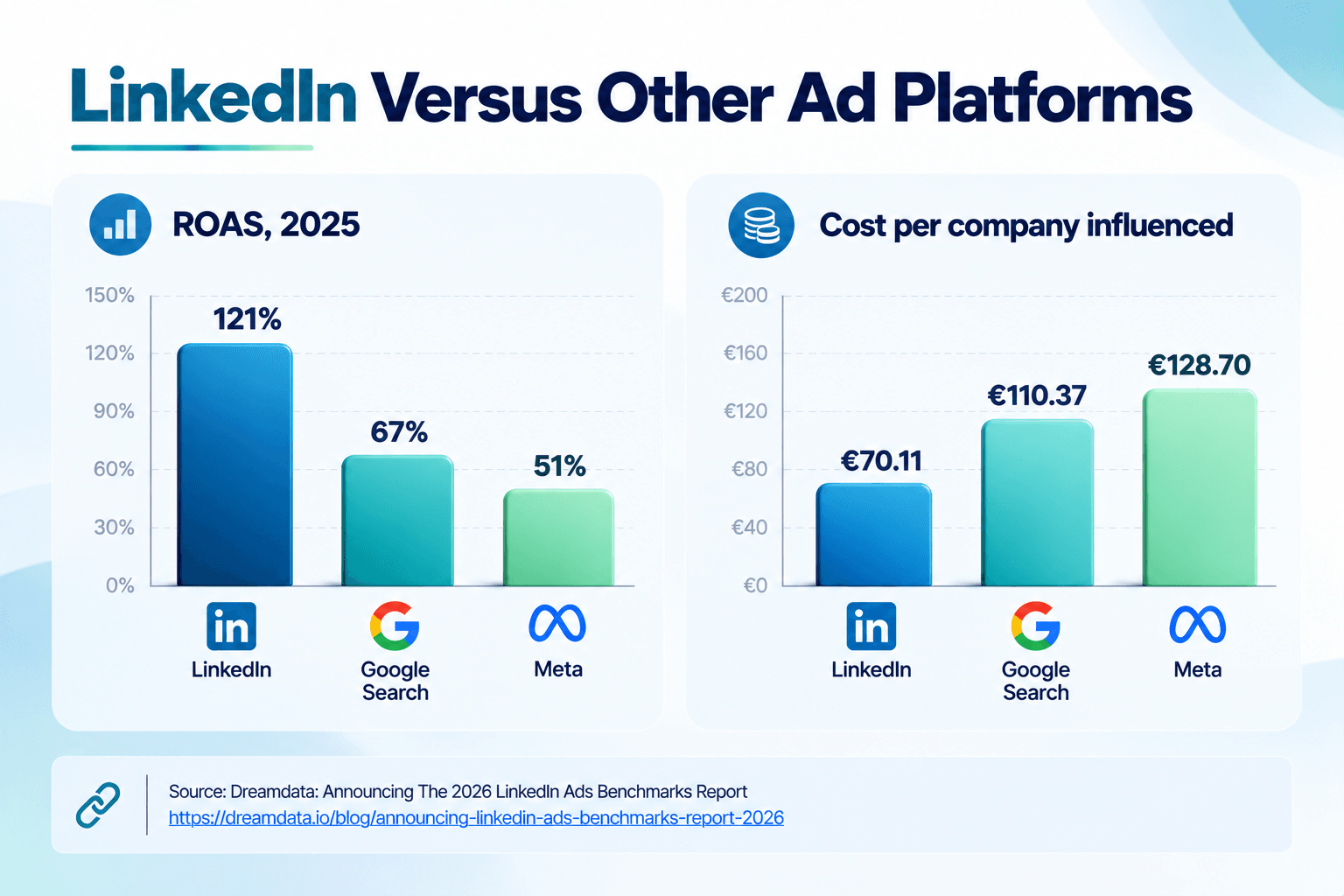
LinkedIn takes 41% of B2B ad budgets. LinkedIn reaches the champion. The economic buyer, technical evaluator, and financial approver research through different channels. The average buying journey spans 4 channels and 10 stakeholders.
Why ABM Channel Mix Determines Deal Size Before the First Meeting Happens
ABM
Oct 6, 2026

A VP of Marketing expanded their ABM program from LinkedIn-only to three channels: LinkedIn, editorial distribution in two industry publications, and account-targeted email outreach on accounts showing intent signals.
Six months in, account engagement had doubled. Sales was getting inbound from contacts the program had not directly targeted. A CMO at one of the target accounts said: “I’ve been seeing your perspective in a couple of the newsletters I read. When your team reached out, I already knew who you were.”
That CMO was not the LinkedIn audience. She was reading industry editorial. The program reached her there. The LinkedIn program had been running for a year and had never reached her once.
The Problem with a Single-channel ABM Strategy
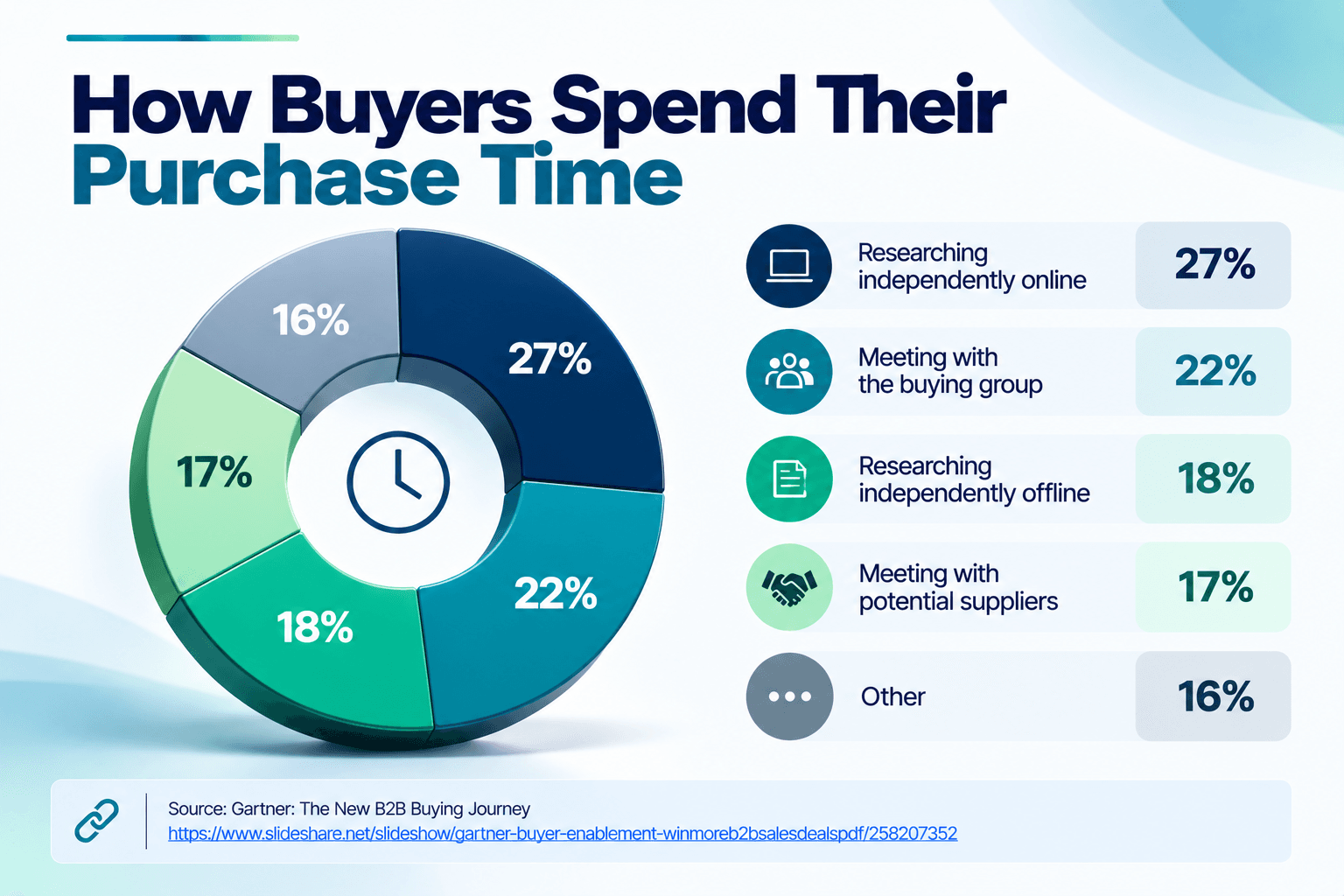
LinkedIn takes 41% of B2B ad budgets, the largest share of any single channel (Dreamdata, 2026). LinkedIn reaches the champion: the practitioner who initiates the evaluation, engages with professional content, and advocates internally for the vendor. The champion is one of 6 to 10 decision makers in a typical complex B2B purchase (Gartner).
‘The Single-Channel ABM Problem’ is the structural mismatch between a channel strategy built around one stakeholder type and a buying decision that involves multiple stakeholder types, each researching through different channels.
The average B2B buying journey spans 4 channels and 10 stakeholders (Dreamdata, 2026). Reaching more of the buying committee before formal evaluation begins is what multi-channel ABM is built to do.
Buying Committee Syndication is Machintel’s framework for activating across the channels each committee role uses for research. See how it works.
The Four Channels and Who They Reach
Each buying committee role researches through a distinct channel context. A channel strategy that reaches all five committee roles requires understanding those contexts before deciding on channel mix.
LinkedIn reaches the champion and practitioner layer: Demand Gen Managers, VPs of Marketing, Marketing Operations practitioners. The people who initiate evaluations and engage with professional content in their feeds.
LinkedIn is effective for champion activation and is the channel most ABM programs already run. The limitation is its ceiling: most economic buyers are not in professional development mode on LinkedIn. Senior executives use LinkedIn for networking but are not consistently engaging with vendor content in their feeds in the same mode as practitioners.
Best use: Champion and practitioner engagement, brand familiarity with the marketing function, retargeting accounts that have engaged with other channels.
Editorial Distribution
Editorial distribution reaches economic buyers, CMOs, CROs, and VPs of Marketing, through industry publications they subscribe to for strategic context and professional development.
94% of buying groups rank their preferred vendors before first contact with sales (6sense, 2025). The economic buyer is not in the LinkedIn feed in the same mode as the champion. They read industry publications to understand market direction and peer practice. Vendor perspectives that appear in those publications build pre-evaluation familiarity in a context that feels editorially credible rather than promotional.
Content syndication through publisher networks places vendor content beside editorial content where the economic buyer already reads. Pre-evaluation familiarity requires consistent exposure over time.
Best use: Economic buyer reach, pre-funnel familiarity building with senior decision-makers, reaching committee members who do not respond to direct outreach.
Direct Outreach
Direct outreach reaches all buying committee roles, but most effectively when the account has prior context from editorial or LinkedIn exposure.
Direct outreach as the first and only ABM channel has a structural problem: the accounts have no prior context for the vendor. Response rates for cold outreach are typically 1-3%. Direct outreach to accounts with prior editorial or LinkedIn exposure sees substantially higher response because the vendor is not unknown.
ABM programs that pair direct outreach with editorial distribution work through sequencing: the outreach arrives at accounts where buying committee members have already encountered the vendor in their reading or feed environments. The outreach is not introducing an unknown entity. It is following up on prior familiarity.
The sequencing implication: Direct outreach should follow editorial and LinkedIn exposure, not precede it.
Best use: High-intent accounts showing active research signals, accounts with 6-12 weeks of editorial and LinkedIn exposure, accounts in known active evaluation mode.
Events
Events reach economic buyers and champions in high-trust, high-context professional settings. Executive roundtables and invitation-based events create engagement where buying conversations happen naturally. The CMO conversation at an industry conference contributes more to deal progression than most digital channel interactions.
The limitation is cost and scale. Events are expensive per contact and reach only the accounts whose personnel attend the same events. This limits event investment to Tier 1 accounts where deal size justifies the cost per contact.
Best use: Tier 1 accounts with active pipeline, economic buyer relationship-building, deal acceleration at late evaluation stage.
The Sequencing Error Most Multi-channel Programs Make
When ABM programs expand from LinkedIn to multi-channel, most make the same error: they activate all channels simultaneously from the start, including direct outreach, before editorial or LinkedIn has built any familiarity at the accounts.
The result: Direct outreach hits accounts that have never heard of the vendor. Response rates are low. The team concludes the new channels are not working. The program contracts back to LinkedIn-only.
The correct sequence has three phases:
Phase 1: Build (months 1-3): Editorial distribution and LinkedIn run simultaneously. No direct outreach. The goal is to establish brand familiarity with multiple buying committee roles before any ask is made. Economic buyers and technical evaluators start encountering the vendor in their professional reading environment. Champions see the vendor in their feed.
Phase 2: Activate (months 3-6): Intent signals or known purchase triggers activate direct outreach. The accounts have prior context. The outreach can reference the content angles or industry situations that the editorial distribution has been addressing. Response rates are substantially higher than cold.
Phase 3: Accelerate (active pipeline): Events and executive engagement for Tier 1 accounts. Reference conversations for financial approvers. Sales-supported outreach for late-stage deals. The goal is giving the champion the materials and the committee the context needed to advance the decision.
Most programs that report multi-channel ABM is not working are running Phase 2 tactics during Phase 1. The channel mix is correct. The sequencing is wrong.
What the Channel Gap Costs
The deal failure sequence for single-channel ABM is predictable. The champion is reached and engaged. The champion takes the vendor to the buying committee. The CMO has seen editorial from two or three competitor vendors over the past year. She has not encountered this vendor in any editorial context. The champion introduces an unknown name to a committee that already has shortlist context on others.
The champion has to make the case for the vendor without the committee having any prior familiarity to build on. The vendor with multi-channel presence in the channels the CMO actually reads arrives in that same meeting with pre-established credibility the single-channel vendor does not have.
More than 40% of B2B deals stall because buying groups cannot align internally (Edelman, 2025). The channel mix is one of the primary variables that determines if the champion walks into that committee meeting with an easy internal case to make or a difficult one against competitors who have been present in those channels for months.
Watching a deal stall after the champion did everything right is one of the hardest outcomes for an ABM team to explain. Machintel’s demand generation team works with B2B marketers on that exact problem, planning channels around the roles on the buying committee, not just the one who replies first. That way, when your champion makes the case, the rest of the committee already knows the name.
The Infrastructure Requirement
Multi-channel ABM requires the infrastructure to reach different audience contexts at scale. For the editorial channel to produce the economic buyer and technical evaluator reach that drives deal size improvement, the editorial distribution network has to include publications those roles actually read.
Machintel’s 33 owned editorial publications create the infrastructure for multi-role reach across marketing and technology verticals. CMO-oriented publications reach economic buyers. Marketing operations and technology publications reach technical evaluators. Running editorial distribution across multiple publications in the network simultaneously produces multi-role reach that a single publication cannot replicate.
What Good Multi-channel Coverage Looks Like
A multi-channel ABM program designed around the buying committee assigns different channels to different roles. The champion receives use-case content and peer case studies through LinkedIn and direct email. The economic buyer encounters editorial content in publications they read for research.
FAQs
Which channels should a multi-channel ABM program prioritize beyond LinkedIn?
The priority depends on which buying committee roles are unmapped. Economic buyers research through analyst content and peer networks. Technical evaluators use vendor documentation, practitioner forums, and third-party review sites. Financial approvers respond to ROI frameworks and case studies. Editorial distribution in industry publications reaches multiple roles simultaneously.
Why does single-channel ABM produce lower deal sizes than multi-channel programs?
Single-channel ABM reaches the champion and misses the buying committee. Deal size in enterprise B2B reflects how many committee members were convinced before the evaluation began. Vendors present across multiple channels used by multiple committee roles enter evaluations with broader committee support, which reduces negotiation pressure and produces larger deal sizes.
How many channels should a mid-market ABM program run simultaneously?
Three channels is the practical floor for buying committee coverage: one for the champion, one for the economic buyer, and one for technical evaluators. Programs with clear buying committee maps can sequence channels by role, activating the champion’s channels first and adding economic buyer channels as account engagement deepens.