58% of B2B marketers use intent data. Only 28% are very satisfied with it. This is ‘The Signal Gap’: most intent data measures content consumption, not buying intent, and the research channels that most influence shortlist formation produce no signal at all. Real buying signals are behavioral, multi-contact, and cross-format. Pre-funnel presence in trusted research channels builds shortlist position before accounts declare intent.
B2B Intent Data Quality: What Real Buying Signals Look Like
Demand
Sep 22, 2026

In This Article
- The Intent Data QBR That Changes How Teams Think about Signals
- What Most B2B Intent Data Is Actually Measuring
- The Satisfaction Gap
- What Real Buying Signals Look like in the Data
- The Dark Funnel Measurement Gap
- The Action Gap Compounds the Problem
- When the Shortlist Is Built Without Intent Data Knowing
- What We See Across 4,000+ Campaigns Annually
- Final Thoughts
- FAQs
A demand gen team had been running an intent data subscription for eight months when we sat down for their quarterly review.
Weekly, the platform showed 40-60 accounts surging on relevant keywords. The dashboard was active. The SDRs were calling the accounts. The reports showed plenty of activity.
When we looked at the pipeline data, the picture was different. SDR conversion on intent-flagged accounts was low. When we mapped the accounts that had actually entered the buying process that quarter back to where they first showed up in the data, most of them had never appeared in a surge report.
They came through the website, a referral, or a piece of editorial content. The accounts that the intent platform flagged as the most active buyers were not buying. The accounts that were buying were invisible to the platform.
This is not an outlier story. It is the common experience for B2B marketing teams running intent data programs. The reason is built into how the data is sourced. This is ‘The Signal Gap’: the structural problem where intent data measures the wrong channels, producing signals that do not reliably identify accounts in active buying consideration.
The Intent Data QBR That Changes How Teams Think about Signals
The quarterly review story above is not unusual because the team was doing something wrong. It is unusual because they actually mapped the gap. Most teams do not.
The intent platform shows activity. The weekly report circulates. SDRs get assigned accounts. Follow-up rates look acceptable. Nobody checks whether converted accounts appeared in a surge report. The platform renews. The cycle continues.
When teams do map the gap, the finding is consistent: the accounts flagged as highest-intent are often not the accounts that close. And the accounts that do close often never appeared in the surge data at all. They came from channels the platform cannot see.
The Pre-Funnel Presence Framework is Machintel’s framework for building B2B vendor presence in the channels buyers use before they contact any vendor. See how it works.
What Most B2B Intent Data Is Actually Measuring
The intent data category has a naming problem.
‘Intent’ implies the data measures whether an account intends to purchase something. What most intent data actually measures is whether an account has consumed content related to a keyword or category.
Most B2B intent data comes from two primary sources:
Co-op keyword networks are consortiums of publishers and websites that pool anonymized data about which accounts are reading, searching, or consuming content related to specific keywords. An account showing up in this data has done something loosely topic-adjacent: read an article, searched a keyword, landed on a publisher page. They have not defined a need, built internal consensus on addressing it, or allocated budget.
Statistical extrapolation models observe behavior from a tracked sample and infer likely intent across a broader universe of accounts. This is model output, not direct observation. The account may have exhibited no directly observable behavior that triggered the signal.
Both produce data. Neither reliably identifies accounts in active buying consideration.
An account in active evaluation has done something different and more specific: defined a problem, gotten internal alignment on solving it, identified budget authority, and started building a vendor shortlist. That behavioral process looks distinct from content consumption. Most intent platforms are measuring content consumption and selling it as buying intent.
The Satisfaction Gap
The market adopted intent data quickly. 58% of B2B marketers use it (Intentsify, 2022). The market reached $3.2B by 2024 (Dataintelo, 2025).
The satisfaction data tells a different story. Only 28% of B2B teams are very satisfied with their current intent data solution (Intentsify, 2022). 87% of marketing leaders report unreliable or inflated intent signals.
Only 26% of intent signals convert to qualified opportunities (DemandScience, 2025).
Those are not marginal quality issues. They are a widespread recognition that the signal being purchased is not reliably measuring what the category promises. The teams running these programs are not failing to use the data well. They are running into the structural limits of what co-op keyword data can do.
What Real Buying Signals Look like in the Data
Real buying intent leaves a different behavioral signature than content consumption. The distinguishing characteristics:
Multi-contact account engagement: More than one person at the same account is engaging with related content within the same 30-day window. A single contact downloading an asset is a name. Three contacts from the same account researching the same category simultaneously is a signal. The difference is the account-level pattern, not the individual data point.
Cross-format engagement on the same topic: The account consumed an article, then registered for a webinar, then downloaded an implementation guide, all on the same topic, over a three-week window. Sustained, progressive engagement is consistent with an active evaluation process. A single high-volume content event on an unrelated day is not.
Content type specificity: Accounts consuming vendor comparison content, switching guides, or implementation-specific resources are further along the evaluation process than accounts reading general category education. The content type matters as a signal. The same volume of consumption at different content types means different things about where the account sits in the buying process.
Session depth and timing patterns: Sustained engagement over multiple sessions across two to four weeks reflects active research behavior. Budget cycle alignment also matters: intent signals coinciding with industry fiscal year planning periods have higher conversion value than out-of-cycle spikes.
These behavioral markers are harder to manufacture in a co-op model and far better predictors of pipeline conversion. They also require more sophisticated measurement than keyword-surge tracking. Most platforms are not built to this standard because volume is easier to sell than quality.
The Dark Funnel Measurement Gap
Here is the structural problem that makes ‘The Signal Gap’ more serious than it might appear.
The research channels that most influence B2B purchase decisions produce no intent data signal at all.
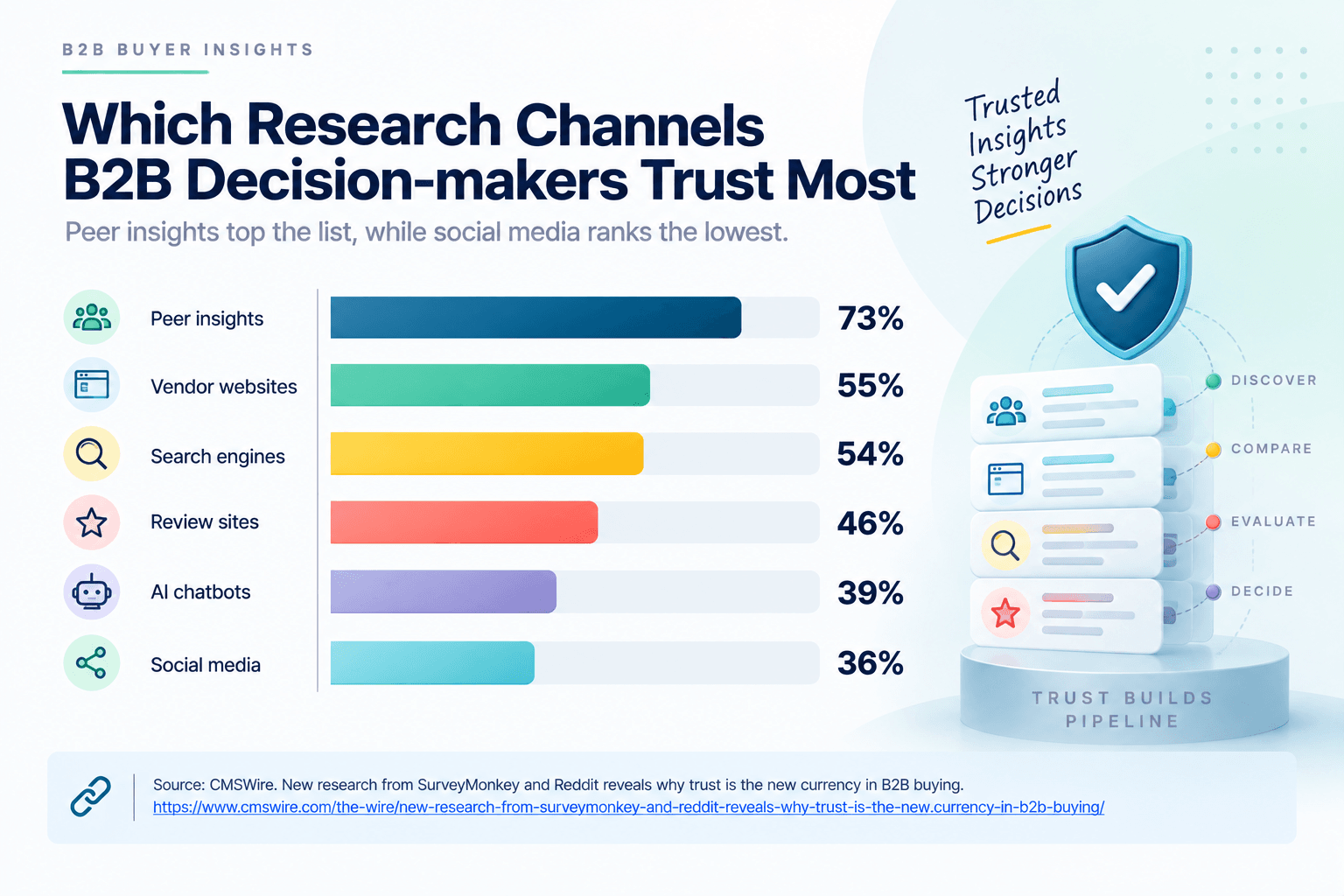
Peer community conversations in private Slack groups, LinkedIn communities, and industry practitioner forums are among the most trusted B2B research sources (SurveyMonkey, 2026). Buyers in these communities discuss vendor experiences, ask for recommendations, and share evaluation insights. None of this produces a trackable signal in any intent platform.
AI-assisted research has become the dominant behavior. 94% of B2B buyers used AI tools in their buying path in 2025 (Forrester, 2026). Buyers query LLMs for vendor comparisons, category overviews, and implementation guidance. These sessions generate no intent signal anywhere.
Analyst consultations, editorial content in trusted industry publications, and conference conversations are the channels that most reliably produce shortlist inclusion. None produce intent platform signals.
Buyers complete about 70% of their journey before contacting sellers (6sense, 2024). Much of that happens in channels intent platforms cannot measure, and those carry the most influence.
The implication is direct. Intent data platforms are measuring the less-influential portion of research activity. The most influential research channels are the darkest part of the dark funnel.
The Action Gap Compounds the Problem
Even where signal quality is reasonable, the activation lag erodes the value.
Batch intent signals can be 7 to 14 days old before a rep sees them (ZoomInfo, 2026). The window between active research and vendor selection can be as short as 2 to 4 weeks for mid-market deals (MarketBetter, 2026). A one-to-two-week lag means the research window is already closing before anyone has reached the account.
Most teams activate signals manually. The typical process: the signal enters the weekly report, the report is reviewed in a meeting, accounts are discussed, outreach is assigned, SDRs begin calling the following week.
47% of intent records go stale within 14 days (DataPartners, 2026). At that lag, a significant portion of the signal value has already expired before the first outreach lands.
A competitor with an activation workflow running in 24 hours has reached the same account when the research window was fully open.
When the Shortlist Is Built Without Intent Data Knowing
‘The Signal Gap’ connects directly to the shortlist formation problem.
92% of B2B buyers enter the buying process with a vendor already in mind (Digital Commerce 360, 2025). The preference forms during the research phase, largely in the channels that produce no intent signal: editorial content, peer recommendations, AI-assisted research, community discussions.
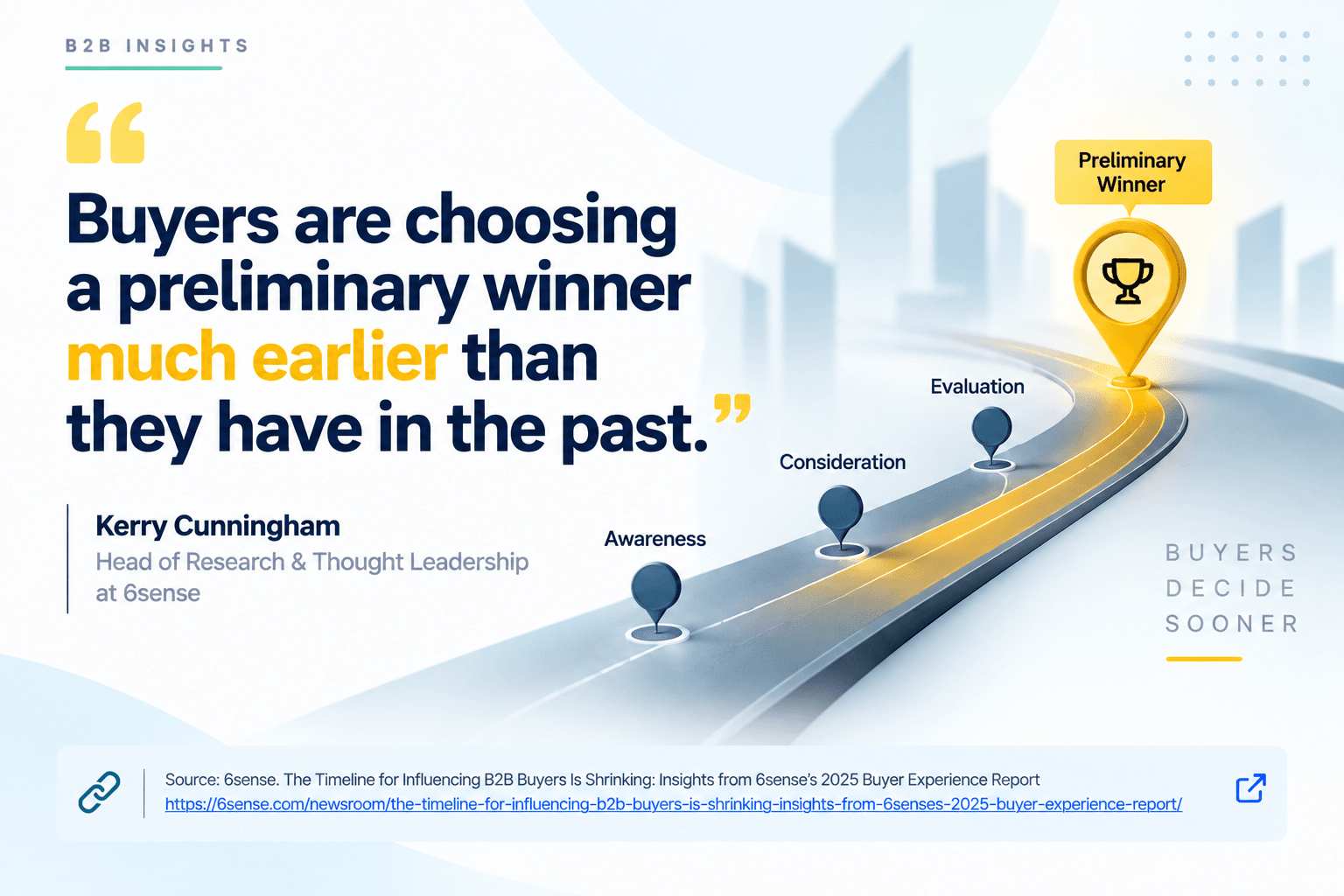
By the time an account shows up in an intent platform’s surge data, they may have already formed their initial shortlist. The intent signal tends to capture late-stage research behavior, after the most influential research has already occurred.
Teams relying on intent data to identify in-market accounts are often identifying accounts after the shortlist formation window has closed. Even when the signal is real, the timing is late. And the vendor who was absent from research channels during shortlist formation is entering an evaluation that is already weighted.
For a closer look at where that shortlist formation happens, see Fix the Dark Funnel Gap Before It Quietly Costs You the Next Deal.
What We See Across 4,000+ Campaigns Annually
Machintel runs 4,000+ campaigns annually across B2B tech and SaaS. The programs with the most consistent pipeline are present in the research channels buyers trust before those accounts show up in any intent platform.
Final Thoughts
The programs that produce pipeline are not the ones with the highest signal volume. They are the ones with the clearest definition of what a qualified account looks like and the discipline to act only when the evidence meets that standard.
Volume is easy to buy. Signal quality is not.
FAQs
Why do B2B marketers struggle with intent data quality?
Most intent data measures content consumption, not buying behavior. The channels that most influence shortlist formation (editorial, peer communities, AI tools) produce no signal in standard intent platforms.
What does a real buying signal look like compared to a content consumption signal?
Real buying signals are multi-contact and behavioral: multiple people at the same account engaging with category content across multiple sessions in a compressed timeframe, not a single contact downloading a whitepaper.
How can demand gen teams build signal quality when the dark funnel produces no data?
Account-level engagement scoring, ICP coverage tracking, and pipeline velocity modeling create proxy layers that make dark funnel influence visible without requiring direct tracking.
Sources
- Intentsify citing Ascend2 Research Report, 2022
- Dataintelo: Intent Data Market Research Report, 2025
- DemandScience: The 2026 State of Performance Marketing Report
- SurveyMonkey: The Hidden B2B Journey report with Reddit, 2026
- Forrester: The State Of Business Buying, 2026
- 6sense: The B2B Buyer Experience Report, 2024
- ZoomInfo: Real-Time Intent Data, The Complete 2026 Guide, 2026
- MarketBetter: B2B Intent Data Guide, 2026
- DataPartners: 28 Intent Data Statistics, 2026
- Digital Commerce 360: Forrester’s B2B Marketing and Sales Are Too Late to Influence Decisive Buyers report, 2025