Intent data and ABM, run as separate programs, produce partial results. Intent identifies which accounts are researching. ABM delivers buying committee content. Neither works fully without the other. The 31 accounts that appeared on both the intent list and the ABM named account list produced 8 of 9 total pipeline opportunities. Intent without ABM misses the buying committee. ABM without intent misses the timing. Combined, they produce pipeline that neither program produces alone.
Data ABM Integration B2B: Why Each Program Is Incomplete Without the Other
ABM
Oct 25, 2026

The intent program had run for four months, flagging 89 high-intent accounts, leading to 22 SDR conversations and 6 pipeline opportunities.
The ABM program had run for the same four months, covering 50 named accounts with the buying committee mapped at each and deep relationship content delivered, and produced 3 opportunities in pipeline.
Then the team overlapped the two lists.
Of the 89 intent-flagged accounts, 31 were on the ABM named account list. Those 31 had received both intent-triggered outreach and ABM content. Pipeline contribution: 5 of the 6 intent program opportunities and 3 of the 3 ABM opportunities. Eight of nine total opportunities came from 31 accounts.
The 58 intent-flagged accounts with no ABM infrastructure yielded 1 opportunity from 16 SDR conversations, while the 31 accounts with both yielded 8 opportunities (5 from 6 SDR conversations, 3 from ABM).
The overlap was not a coincidence. On those accounts, timing and targeting were both in place, which neither program supplies alone. The accounts with both intent monitoring and ABM infrastructure produced opportunities at roughly 15x the per-account rate of accounts with intent alone (8 of 31 versus 1 of 58).
What Intent Data Without ABM Cannot Do
Intent data without ABM account selection is a broad-market signal sweep. It identifies which companies in a large universe are researching a category. Without account prioritization, buying committee mapping, and personalized content infrastructure, the signal produces a list, not a pipeline program.
The ICP filter problem: An intent program without ABM account selection activates on any account generating a high-intent flag. A strong behavioral cluster signal from an account with poor ICP fit triggers the same activation as a strong signal from a T1 ICP account. The conversion rate reflects the mix.
The buying committee problem: Behavioral Cluster Intent flags accounts. It does not define buying committees. Without a defined buying committee for each account tier, the intent signal cannot apply role weighting correctly. The contacts the SDR should be reaching, and the contacts whose behavior should generate a signal, are defined by the buying committee map. Without that map, intent activation applies generic job title filters and produces contact lists that do not match the actual purchase decision structure.
The personalization problem: Intent signals identify what the account is researching. Acting on that signal effectively requires content assets matched to the account tier and the research pattern. Generic content delivered to an account showing late-stage evaluation signals misses the timing precision that intent data provides. The content infrastructure is an ABM asset, not an intent asset.
What ABM Without Intent Data Cannot Do
ABM programs without intent data are timed to the program calendar, not to account evaluation cycles.
The ABM account list is built at program launch based on ICP criteria: firmographics, technology fit, strategic account value. The list is set. Accounts receive content in Q1 because Q1 is when the campaign runs. Some accounts are in active evaluation in Q1. Many are not.
The static timing problem: Intent data solves what ABM cannot. It identifies when each account is in active evaluation now. A target account in month three of a relationship-building content sequence may not be evaluating. The same account showing a behavioral cluster signal, with multiple buying committee contacts researching the category in a 14-day window, is evaluating now. The ABM activation is most effective in that window, not in month three of a calendar-driven sequence.
The coverage efficiency problem: ABM programs targeting 100-300 named accounts require significant content and personalization investment per account. Without intent signals, investment is distributed equally regardless of current evaluation status. Intent-triggered ABM concentrates activation on accounts showing current research signals, producing higher return from the same investment.
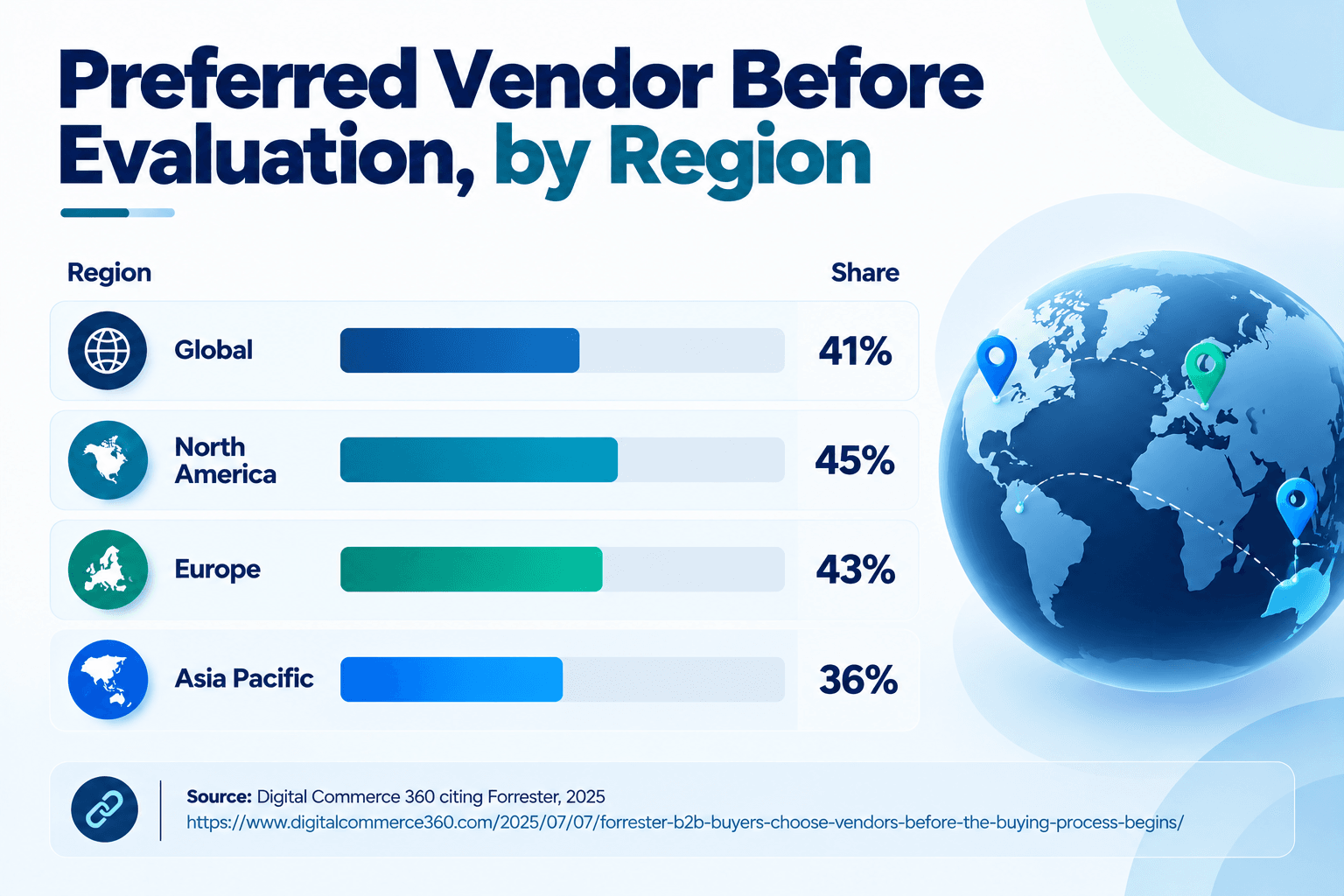
The shortlist timing problem: 94% of buying groups rank their preferred vendors before first contact with sales (6sense, 2025). An ABM program without intent monitoring cannot detect when that window opens for each account. The program’s content delivery may arrive in month two of the relationship program, before the account enters evaluation, or after the shortlist is formed.
Having SDRs call intent-flagged accounts that marketing never assessed, with no committee map or content ready, is a frustrating way to start a conversation. Machintel helps B2B demand generation teams connect the two, so every flagged account arrives with context and the people to reach. The first call then builds on work already done.
The Combined Model
The intent-triggered ABM model uses intent data as the activation layer within an ABM account framework.
Step one: Account selection (ABM infrastructure). Define the target account universe using ICP criteria. Define buying committees per account tier. This is the ABM account strategy work: firmographic qualification, technology fit analysis, buying committee composition per ICP segment.
Step two: Intent monitoring (Intent infrastructure). Monitor the defined account universe continuously for behavioral cluster signals. When accounts in the universe show multi-contact research behavior in the relevant category within the detection window, they enter the activation queue.
Step three: Intent-triggered activation. Accounts showing intent signals receive the full ABM treatment: personalized content delivered to the defined buying committee contacts, account-level messaging, coordinated SDR and marketing engagement. The ABM activation is triggered by the intent signal, not by the program calendar.
Step four: Signal-based prioritization. T1 accounts showing intent signals receive the most intensive ABM activation. T2 accounts showing intent receive a scaled version. T1 accounts not showing current signals receive lighter-touch awareness content rather than full activation resources.
The intent signal determines when. The ABM framework determines who and how.
For the activation workflow connecting signal to SDR, see Intent Into Action: The Five-Stage Activation Workflow.
What the Data Shows
Intent and ABM each solve a problem the other leaves open; the data shows what changes when both are in place, with timing precision and targeting precision working together.
Most organizations chase intent signals that don’t convert, and 87% say so (DemandScience State of Performance Marketing, 2026). The ABM account selection and buying committee framework reduces the ICP-mismatch problem and provides the personalization infrastructure that makes intent activation effective.
Meeting acceptance rose from 12% to 47% when accounts received three or more touches within 48 hours of showing buying intent (Demand Loops). Intent monitoring solves the static timing problem. The ABM activation fires when accounts are in active evaluation, not when the program calendar says Q2 is starting.
Intent-triggered ABM reaches first pipeline sooner than ABM alone. The acceleration reflects intent’s ability to identify which target accounts are in evaluation now, rather than waiting for the relationship program to mature before evaluation signals appear.
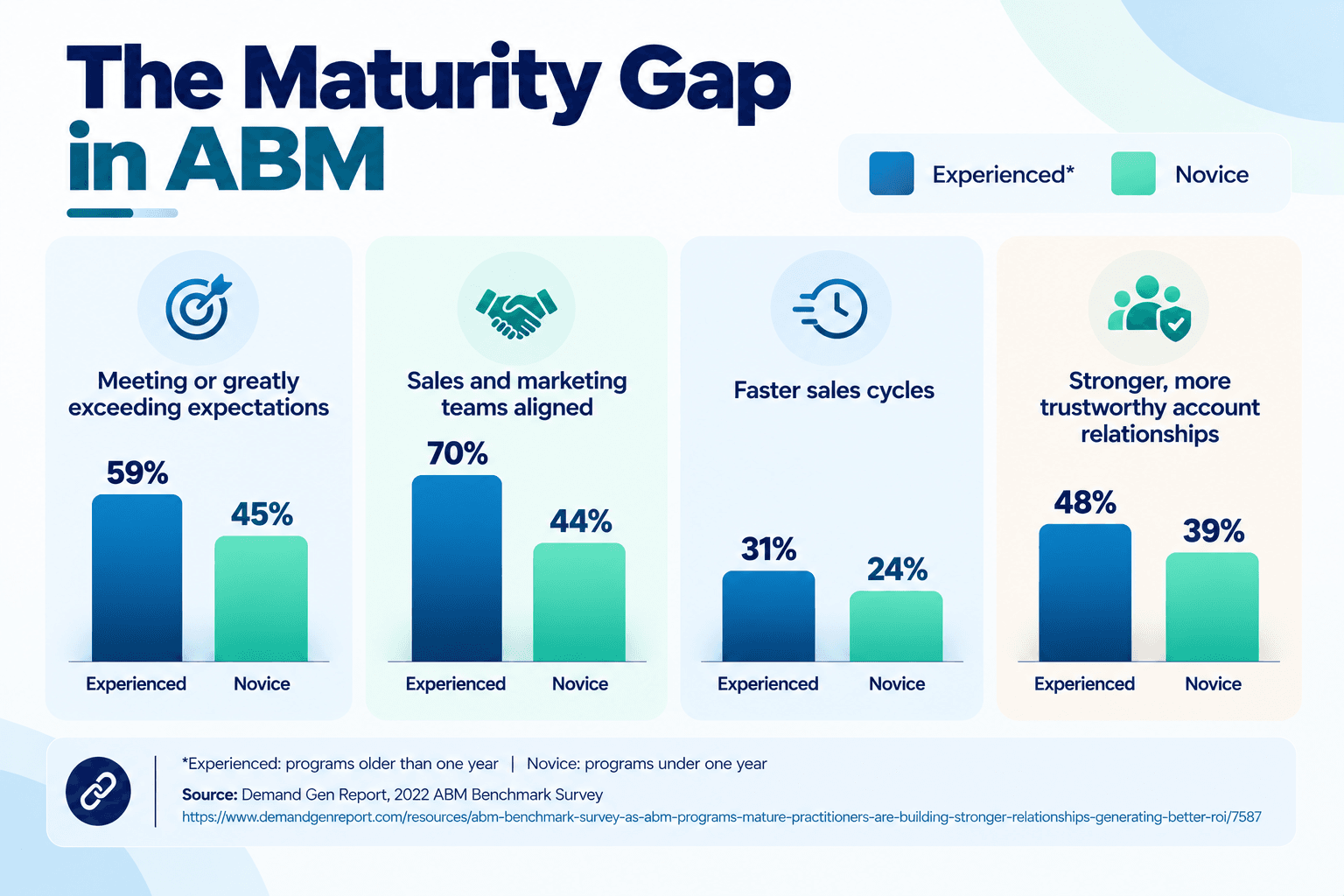
Forrester’s 2024 data shows ABM accounts have larger average deal sizes than non-ABM accounts, with just under one-third of respondents reporting an increase of 21% to 50%. The ABM framework concentrates activation on accounts selected for strategic fit, not just current evaluation activity.
The Infrastructure Each Requires from the Other
Running intent data effectively requires three pieces of ABM infrastructure: a tiered account list that serves as the intent monitoring universe, a buying committee map per ICP segment that enables accurate role weighting, and personalized content assets by account tier and research stage that the activation can deploy.
Running ABM effectively with intent requires three pieces of intent infrastructure: continuous account monitoring against the target account list, contact-level behavioral cluster signals with named contacts and job titles (topic taxonomy cannot support ABM buying committee activation), and the signal-to-activation workflow connecting intent detection to timed SDR engagement.
Neither is an optional addition to the other. The buying committee map is what makes intent role weighting work.
What the Combined Model Looks like in Practice
Running intent and ABM as separate workstreams is not a resource problem. It is a handoff problem.
Separate workstreams: The intent program passes the SDR a list of flagged accounts. The SDR calls with no buying committee map, no account context and no content to send. Meanwhile the ABM program delivers its content calendar to named accounts, whether or not they are evaluating.
Integrated model: A named ABM account shows multi-contact research behavior. The signal routes to the SDR with the committee map and account tier attached. Within 48 to 72 hours, role-matched content reaches the mapped contacts and the SDR reaches out on the topic the account is researching.
The overlap analysis shows which of these two descriptions a program is actually running.
The Account Overlap Analysis
The simplest diagnostic for whether intent and ABM programs are being run in parallel rather than integrated is the account overlap report.
Pull the intent-flagged accounts from the last 90 days. Pull the named accounts from the ABM target list. Overlap them.
For many programs, only a minority of intent-flagged accounts are on the ABM list. Meaning: most accounts flagged as showing high intent were not on the ABM radar, and many named ABM accounts showed no intent activity in the last 90 days.
This reveals two simultaneous problems:
The intent program is surfacing accounts the ABM program has not assessed for strategic fit. SDRs are being asked to contact these accounts cold, without account intelligence, buying committee maps, or content already deployed. The conversion rate reflects the missing infrastructure.
The ABM program is running campaigns against accounts that are not showing intent signals. Content is being delivered, relationships are being built, SDR capacity is being consumed on accounts that may not be in evaluation for another 12 months.
When the overlap accounts are analyzed separately, the pipeline density is typically higher than the non-overlap population. These are the accounts where both signals were present: strategic fit and active evaluation. The program found them in both dimensions at the same time.
The combined model formalizes what the overlap analysis shows empirically. ABM defines the strategic account universe and buying committee map. Intent monitoring watches that universe for evaluation signals. When a named ABM account shows ‘Behavioral Cluster Intent’ signals above threshold, the full ABM activation package deploys to the mapped buying committee within 48 to 72 hours.
The results point to a structural cause: the gap between who you should be talking to and when you actually talk to them.
FAQs
How do intent data and ABM work together?
Intent data shows when an account is in active evaluation. ABM defines which accounts and buying committee contacts to reach, and with what content. Intent monitoring watches the ABM account universe for behavioral cluster signals, and when a named account crosses the threshold, the ABM activation package deploys to the mapped buying committee. Without ABM, intent produces a list; without intent, ABM runs on the program calendar.
What is the difference between topic taxonomy intent and behavioral cluster intent?
Topic taxonomy intent flags an account when company IPs visit pages tagged to a category. Behavioral cluster intent tracks multiple named contacts at the same account consuming related content across sessions within a time window. The first is a page view counter. The second is a buying signal.
How can a B2B marketer identify which type of intent data they are purchasing?
Ask the vendor three questions: what percentage of signals are contact-level versus IP-level, what is the multi-contact threshold required before an account is flagged, and what is the signal latency between behavioral activity and delivery. A vendor selling behavioral cluster intent can answer all three precisely.
Why do false positive rates matter in intent data programs?
False positives consume SDR capacity without producing meetings. With 40-60% false positive rates typical of third-party intent data, a team working 100 intent signals per week spends 40-60 hours on accounts that were never in evaluation (Abmatic). That is the direct cost. The indirect cost is the pipeline that was not built with those hours.
Sources
- Business Wire citing 6sense 2025 B2B Buyer Experience Report
- DemandScience State of Performance Marketing, 2026
- Demand Loops: What 12 Months of ABM Data Reveals About What Actually Works
- Forrester: Account-Based Marketing Results In Larger Average Deal Sizes Across Regions, 2024
- Abmatic: Intent Data vs First-Party Signals, Which Should Drive Your ABM Strategy